Outrage

Today’s Supreme Court decision constitutes an absolutely unprecedented intrusion into the practice of medicine and into the relationship between a woman and her doctor. Every physician in America should be outraged. And to not provide an exception in the law for the health of the mother shows complete and utter disregard for women.

One shining star in this dark sky is Ruth Bader-Binsberg, who was so outraged that she chose to read her dissenting opinion, apparently something rarely done. Here’s just a little of what she said:

In sum, the notion that the Partial-Birth Abortion Ban Act furthers any legitimate governmental interest is, quite simply, irrational. The Court’s defense of the statute provides no saving explanation. In candor, the Act, and the Court’s defense of it, cannot be understood as anything other than an effort to chip away at a right declared again and again by this Court—and with increasing comprehension of its centrality to women’s lives.

I encourage you to read Bader-Ginsberg’s opinion in its entirety. It is brillliant, beautifully written, and utterly dismantles the majority opinion. She shows without a doubt that those in the majority chose to completely ignore not only the legal precedent but every bit of legitimate medical evidence presented to them.

You may argue all you want as to whether or not you personally believe in abortion, but at this point in time, abortion is legal. The courts have no right to decide what technique a physician uses to perform that legal act. That decision is made by the physician and the woman, with her health and best interests in mind.

It is time that the Supreme Court take down the statue of Justice that stands at their doorstep. Let’s stop pretending that justice is what this court hands out. For justice is a woman. And this Supreme Court has no right to display her as their icon.

Road Trip to Athens, Georgia: Part 1 – What to Bring

Well, it’s been a long time since my fingers have graced these keys, and it sure feels good to be back. I’ve missed you all, and am looking forward to some serious catching up time this week.

So where have I been? On a little road trip, that’s where. And I’m here now to tell y’all about it. So pull the old pickup out of the shed, fill up the tank, roll down the windows and crank up the Rockabilly ’cause we’re heading down to Athens, Georgia to visit my little brother Joe…

It’s a long drive, so better bring along something to do in the car. Here’s what we brought along:

Books on CD:These are especially critical if one of your kids gets carsick when she reads in the car.

Feed by MT Anderson. A fabulous suggestion from daugher Nats. Narrated by a young teen who falls for a girl in a future America where everyone is plugged into the web via an implant in their brains, through which they are fed constant marketing messages matched perfectly to their live’s experiences. Chilling, and not so far off from a possible future. Not to mention a great opening line:

“We went to the moon to have fun, but the moon turned out to completely suck.”

Lizzie Bright and the Buckminster Boy by Gary D Schmidt. The sadly beautiful story of an unlikely friendship between Turner, a young minister’s son, and Lizzie Bright, the grandchild of former slaves in Phippsburg, Maine in the early 1900’s. Lizzie lives with her grandfather on Malaga Island in a racially-mixed community destined to be destroyed by the greedy townspeople of Phippsburg, who seek to turn the “Island of Maroons” into a resort community. Although the two children are fiction, the story of the town and the islanders is a true one. The author also weaves in nature in beautiful ways, giving the sea breeze it’s own role in the story, and making the reader long to ride with the whales.

Drive Time Italian. Learn Italian while you drive. Within the first few minutes, you’ll be saying many wonderfully useful travel phrases such as “Il camion e blanco” (The truck is white) and “Vedo un segno giallo” (I see a yellow sign). Actually quite a nice little audiocourse. We have till July to learn Italian, so this wasn’t a bad start.

Podcasts
It’s also not a bad idea to load up your IPOD with a few PBS podcasts to listen to when daughter Em asks for silence in the car so that she can do her homework. Here’s what I listened to:

China on the Rise: Paul Solomons’s seven part series from The News Hour with Jim Lehrer on the emerging economic giant. Fascinating.

NPR Fresh Air. My all-time favorite radio interview show.

World Cafe Words & Music from WXPN: Ah, WXPN – One of the radio stations I missed the most when I left Philly for NY. Now I can listen on line. If only Sleepy Hollow was on podcast…

NPR
We had a great little directory of stations nationwide that we tuck in with the maps so we’re never without our feed. But you can go online before you leave, punch in your trip route, and print out a personalized NPR Road Trip.

Books
Okay, our listening needs are taken care of. How about some actual reading material? I brought The Namesake, Mr TBTAM read Nelson Demille’s latest book, and Em plowed through The Invisible Man.

Casino Royale
Oh, all right. I’ll admit it. We did pick up one movie along the way…Nats got through the first half hour in the car before we had to pull over for her to settle her stomach. We watched the rest in the hotel room the last night on the road. One of the best title sequences in a long time. More violent than I think 007 should be, but I would still recommend it. And be prepared for your libido to kick in, ladies, the new 007 may not be Sean Connery, but he is one hot dude…

Great Music
We’re heading South, so grab those Dixie Chicks CD’s. We also listened to John Mayer’s Continuum, and Joni Mitchell and Paul Simon, and Gillian Welch. We also found some great new music in Athens, but I’ll leave that for another post.

Food
We actually did not pack much car food, just some fruit and cheese and pretzels and water and diet coke for me. We promised ourselves we would eat 3 squares and avoid road food, and we almost succeeded.

Maps
I love ’em, don’t you? The crinkling of the pages as you wrestle with them in the front seat with the wind tearing the edges from your hands…

Okay, we’re ready to go. Have I forgotten anything other than my pillow? What would you bring?

Next Up: The Road

Just Thinking (I do that sometimes…)

So, here’s what I’ve been thinking lately.

We all have to die, right? Really. We cannot live forever, even if we think we can.

So no matter how good we get at health care and taking care of ourselves, we are all going to die of something. And there will always be a “#1 killer of women” and a “#1 killer of men” for us to be afraid of.

And a cause to fight or a new drug to sell or a headline to scare us or funding that is needed from the government for treatment and research.

So when does it stop?

I mean, what happens when we’ve cured cancer and found the perfect statin or perfect diet? What will we do when the word “plaque” only refers to a thing you get to hang on your wall ? Or when diabetes is discovered to be from a virus and we get the vaccine, and when stem cells make Alzheimer’s and Parkinson’s obsolete…will there be anything left to die from?

Or will we all live forever?

And if we don’t live forever, how long will we all live? To 120 years old? 150?

At that point, will there be a group of people who are living to 150 and still look great but a whole lot of people will still be dying at 95 from heart disease because they can’t afford the best health care?


But that’s already happening, isn’t it? Just on an earlier scale.

I mean, here we are, just plowing ahead curing everything right and left, leaving many of us to live longer and longer while women and children are dying at young ages from thing like malaria, measles and infant diarrhea. Diseases we in the developed world left behind in the history books years ago.

Really, really think about that. While we sit here worrying about which statin to take because we won’t get off our fat ass to exercise, kids are dying all over Africa from malaria. And malnutrition.

That’s because there’s no master plan. There’s no prioritizing where the money is going on a worldwide basis.

Now I know those laisse faire capitalists out there are saying “Leave it alone. Let it evolve. It’s working, just not at the pace everyone wants it to. And not equally everywhere, but give it time. We’re figuring it out…”

But are we figuring it out? Or are we just figuring out best how to make money doing it?

Because if it’s really all about making money, then we should not be surprised that we spend so much on it. And we should all just shut up and spend the money and see where it takes us.

But we really don’t want to spend the money, do we? We want our cash for other things, like I-phones and HDTV and oil guzzling minivans and movie downloads.

Of course we can’t say that, so we talk about the uninsured and the poor who can’t afford health care.

But really, how much would it cost for us just to take care of those folks? Not much compared to what we are paying overall for health care we would rather get for free so we can spend our money elsewhere. And certainly pennies compared with the billions we spend trying to hang onto every last second of life because we really haven’t come to terms with the fact that we all have to die. And that if that death happens to be unexpected, it doesn’t necessarily mean that someone did something wrong and we have to find someone to blame.

How many times have I heard people speak these words – “Why haven’t they found the cause of … yet?” or “Someone has to have figured this out by now” or “”How come they don’t know …?”, all spoken with the expectation that it’s someone’s responsibility to have figured these things out, and if it’s not done, then by god, someone’s not doing their job!

All of which leads to lawsuits and raises the costs of health care even further.

Or do I have it all wrong? Maybe health care costs so much because the system isn’t free market enough. After all, the price of most things goes down with time – like I-Phones and laptops. But health care just keeps getting more expensive.

Maybe the answer is to just set the beast free. Get rid of insurance companies and go back to the days when folks just paid the doctor. Then who knows what health care would look like? Maybe I’d become obsolete because someone else has figured out how to deliver health care more cheaply.

Uh, oh. This though thought train is taking a turn I don’t like. I think I’ll stop now.

Apologies to Missouri

In my previous post, I trashed an entire state, and I apologize. Aparently, the differences in generic formularies between New York and Missouri are significant, and has led to the my confusion about what I can and cannot write to get a generic for my patient.

I’ve updated my prior post, and hope to stave off any nasty rumors about the show me state.

Missouri says "Show Me the Generic"

(This post has been updated to correct any misinformation in its previous version.)

Well, Missouri, the “Show Me” state, is living up to it’s name. You want to fill a prescription there? You want it to be generic? It has to be on their generic formulary.

Each state, you see, has it’s own generic substitution formulary, unless the generic subsitution has been mandated by the FDA. If a drug is on a state formulary, it can be substituted by the pharmacist as long as you don’t specify otherwise. If a generic exists, and it’s not on the state formulary, the physician has to ask for that generic by name.

Why should I care about Missouri’s formulary?

Because now that Aetna/US healthcare has bought a mail order pharmacy in Kansas City, I am told that the scripts I write for patients in that plan are being filled according to Missouri state formulary. Not a few drugs I frequently write that once were automatically substituted here do not have generics in Missouri. And my patients are getting hit with the difference.

I was asked by a patient today to rewrite all her scripts with specific generic names so she could mail them away. Otherwise, she would end up paying full price for the brand name, as had happened to her (and her husband) three months ago when they first filled scripts at Aetna’s new pharmacy. Surprise! Your former $20 copay drug is now $150. Already filled and deducted from your credit card, sorry.

It’s hard enough to keep track of my own state formulary, let alone those of the other 49 states where big insurers might want to buy a pharmacy. And now I have to keep track of the generics out there, and decide which generic I want to write if it’s not on a state’s formulary. (Not to mention the confusion and burden on my patients.)

I do not have the information needed to decide which generic I should write, do you? When it comes to oral contraceptives, multiple generics can exist for a single formulation. I can’t tell them apart. I write the brand name, and let the FDA and the pharmacist do the rest.

Maybe I’m too trusting. Maybe I should keep track of all the generics out there. Maybe I should care which generic my patient gets. But I don’t.

Am I wrong?

Union Pacific and Contraceptive Coverage – What’s Really Going On?

All right, I’m confused.

Union Pacific goes to a higher court to argue that they do not have to provide healthcare coverage for the cost of prescription contraceptives, and they win.

Than I read in the NY Times that the Union Pacific, which has been providing coverage for contraception since they lost the initial lower court case in 2005, does not intend to take the coverage away.

In July 2005, a federal district court in Nebraska ruled in favor of the plaintiffs and ordered Union Pacific to cover all prescription contraception approved by the Food and Drug Administration.

Under Thursday’s ruling, the company could end that coverage. But a spokesman for Union Pacific, the nation’s largest rail line with more than 50,000 workers, said yesterday that the coverage would continue.

“We’re not going to take it away,” the spokesman, Mark Davis, said. The ruling covers all of the railroad’s unionized female employees.

So what were they doing in court????

Addendum:

Okay, so I may have figured it out. Apparently after UP initially filed their appeal, collective bargaining between the railroads and the unions led to contraceptive coverage anyway, so they can’t back out on it now.

However the 8th Circuit ruling means that UP won’t have to pay the plaintiffs attornies’ fees or back contraceptive costs. Still, I can’t help but wonder who else was pushing them to continue their appeal on this one. It has such far reaching impact…

Union Pacific and Contraceptive Coverage – What’s Really Going On?

All right, I’m confused.

Union Pacific goes to a higher court to argue that they do not have to provide healthcare coverage for the cost of prescription contraceptives, and they win.

Than I read in the NY Times that the Union Pacific, which has been providing coverage for contraception since they lost the initial lower court case in 2005, does not intend to take the coverage away.

In July 2005, a federal district court in Nebraska ruled in favor of the plaintiffs and ordered Union Pacific to cover all prescription contraception approved by the Food and Drug Administration.

Under Thursday’s ruling, the company could end that coverage. But a spokesman for Union Pacific, the nation’s largest rail line with more than 50,000 workers, said yesterday that the coverage would continue.

“We’re not going to take it away,” the spokesman, Mark Davis, said. The ruling covers all of the railroad’s unionized female employees.

So what were they doing in court????

Addendum:

Okay, so I may have figured it out. Apparently after UP initially filed their appeal, collective bargaining between the railroads and the unions led to contraceptive coverage anyway, so they can’t back out on it now.

However the 8th Circuit ruling means that UP won’t have to pay the plaintiffs attornies’ fees or back contraceptive costs. Still, I can’t help but wonder who else was pushing them to continue their appeal on this one. It has such far reaching impact…

Jean-Georges’ Chicken Soup with Coconut Milk and Lemongrass

I first tasted this enlightened Thai standard some years ago at Vong, Jean-George Vongerichten’s beautiful restaurant in the Lipstick Building on the Upper East Side. It was in the midst of that winter’s biggest snowstorm, which meant that we were able to score a table, although they sat us in the bar. The waiter, who saw how cold I was, suggested the Chicken Soup with Coconut Milk and Lemongrass, and he was spot on. That soup warmed me all the way down to my bones, and I’ve loved the place ever since.

If you’ve never been to Vong, you really should go. The decor is absolutely gorgeous, and the French-Thai menu a delight. True, it’s no longer trendy enough for poor Frank Bruni

It’s been around since 1992, when…the pairing of sautéed foie gras with mango was considered novel, and the galangal in a chicken and coconut milk soup seemed exotic. ..More than a decade later…(the) foie gras and that soup lack a sense of surprise that, it turns out, were integral to the intensity of their appeal. Like the majority of the dishes at Vong, they’re entirely pleasant but not remotely compelling.

Since when does food have to continually surprise us to be good? What’s wrong with being delighted again and again? (Maybe someone should whack Frank over the head with a big piece of lemongrass while he’s eating this soup – I’ll bet that would surprise him…)

Look, if you’re addicted to trendy, then you’re forever going to be disappointed, and should go eat at that $500 a meal place over at the new Time Warner Building. And when you’ve done that one too many times, they’ll be ready with a new hot $1000 a plate place for you and your supermodel friends.

But if, like me, you love to eat wonderful French-Asian fusion that never fails to please, then you will love Vong. And since the trend-addicts are eating elsewhere, you’ll be able to score a table in the main room.

Jean-Georges Chicken Lemongrass Soup

Jean-Georges lightens up the traditional Thai recipe by substituting chicken broth for some of the coconut milk. You could lighten it further by using the new low fat coconut milk. (Let me know how it tastes if you do.) There are various versions of this recipe on the web – everytime Jean-George gives it out, it’s a little different. This version is based on the one from his Cooking at Home cookbook, accessed via Leite’s Culinaria. I changed it to serve the rice in the bowl, rather than on the side as they do at Vong. If you can’t find Lemongrass or lime leaves in you area, you can order them online.

Broth Base
1 tbsp oil (canola, grapeseed or peanut)
1 medium onion, minced
1-2 garlic cloves, chopped
1 lemongrass stalk, trimmed of its outer sheath and hard ends, then cut into 2-inch sticks and smashed a few times like you would a garlic clove
2 teaspoons Thai red curry paste or curry powder
6-1/8 thick slices galangal or ginger (unpeeled)
3 lime leaves, dried or fresh
4 cups chicken broth

Late Additions
1 13-14 oz can of coconut milk
12 oz raw skinless, boneless chicken breasts, cut into 1/2-inch cubes
12 Shiitake mushrooms, stems removed and discarded, and caps cut into strips
Juice of 2 limes
2 tbsp Fish sauce (nampla)

Garnish
3 scallions, sliced on the diagonal
1/4 cup minced cilantro
Cooked Jasmine rice

Heat the oil in your soup pot over medium heat, then add onion and garlic. Cook a minute, stirring, then add the lemongrass, curry paste, ginger, and lime leaves. Cook, stirring, for 3 or 4 minutes, then add the stock. Bring to a boil, then reduce the heat to medium, and simmer for half hour. (Can be made ahead.)

While the stock is cooking, make enough Jasmine rice for 4 servings.

Just before serving, add the coconut milk to the broth base, then the chicken and the mushrooms. Cook for about 5 minutes, or until the chicken is done. Stir in the lime juice and nam pla, taste and adjust seasonings.

To serve, place an ice cream scoop of jasmine rice into the bowl. Pour soup over it, garnish with the scallions and cilantro. If you leave the galangal and lemongrass in – they are fun to chew on – have a small bowl nearby where they can be discarded.

Serves 4.

(This Post is being submitted to Weekend Herb Blogging, sponsored by Thyme for Cooking this week.)

Judges Uphold Union Pacific’s Right to Refuse Payment for Birth Control

In yet another backward step for reproductive rights of women, the Eighth Circuit Court of Appeals, in a 2 to 1 decision, reversed a lower court decision in favor of the female employees of Union Pacific Railroad, who had successfully sued their employer in 2005 for refusing to cover prescription contraceptives in their employee health plan.

The court argued that, since the plan did not cover contraception for men or women, it did not discriminate against women.

Union Pacific’s health plans do not cover any contraception used by women such as birth control, sponges, diaphragms, intrauterine devices or tubal ligations or any contraception used by men such as condoms and vasectomies. Therefore, the coverage provided to women is not less favorable than that provided to men. Thus, there is no violation of Title VII.

The judges sidestepped the one of the major arguments in support of the plaintiffs – That since UP covered Viagra and drugs for male baldness, it should cover contraception. Here’s the opinion again:

We decline to address whether pregnancy is a “disease.” Instead, we simply hold that the district court erred in using the comparator “medicines or medical services [that] prevent employees from developing diseases or conditions that pose an equal or lesser threat to employees’ health than does pregnancy.”

Believe it or not, Union Pacific was named by Working Mother Magazine as one of it’s 100 best companies to work for in 2006. How that happened, I’ll never know….

Caving in to Costco

The Costco in Long City Island

About ten years ago, they built a Costco in Long Island City, right on the East River and across the street from the Naguchi Museum and adjacent to the Socrates Sculpture Garden. I was aghast at the use of that marvelous space to house a giant box store, and never once considered shopping there.

After all, I am the quintessential New York food snob, one who worships weekly at the cheese counter at Fairway market and whose idea of an orgasmic experience is a good olive. Someone who eschews prepackaged convenience foods as if they were poison, who would rather starve (well, actually, order in) than eat what the rest of America eats. I am not an American, after all. I am a New Yorker. (That’s practically a Parisian.) And I do not shop like Americans do.

At least not until yesterday.

You see, last weekend, at my musical theater class party, I had a piece of one of the most delicious cakes I’ve ever tasted. I was surprised to learn that it was from Costco, as were all the wonderful appetizers. That was interesting, but then I found out what Costco charges for the cakes.

That was it. Like a kid being given their first hit from a schoolyard dealer, all I could think of since then was going to Costco. And yesterday, that’s what Mr. TBTAM and I did.

Mr TBTAM enters Costco

I am still reeling from the experience, which was, in truth, a bit overwhelming in a way that I don’t yet entirely understand. About halfway through the store, at a point when our cart was filled to the brim with paper towels and toilet paper and cases of beer and diet coke, and butter and two giant Nutellas and god knows what else, I just froze.

I was paralyzed and completely overwhelmed. I could buy nothing more. From that point, Mr. TBTAM and I sort of just wandered through the fresh food section, glassy-eyed, until we found our way to the check out counter, where we learned that we should have brought our own shopping bags. We paid with our debit card (they take no plastic except Amex), packed up the car and drove home. I rearranged my pantry to fit everything we bought, and now am sitting trying to understand the experience. Not unexpectedly, I have a few comments and some questions.

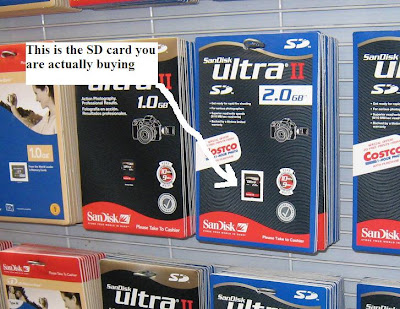
1. Does everything have to be so big? I understand if what you are getting is actually large (like the 30 rolls of toilet paper we bought) but why are the SD cards (which in truth are about an inch square) packaged to appear as if they are 20 times that size? The I-Tunes gift certificate package was a full foot square! I don’t understand…

2. Why do you have to pay to shop there? I would have gone long ago if there was not that $50 membership fee. Make the visit free, and you’ll suck in lots more folks like me, I promise…

3. Does one shop there on some regular basis? Or is it just a one time experience, like going to Disney World or Las Vegas? I’m a little worried about going back – I’m afraid of all the money I might spend. Between the membership fee and what we bought, we spent $350 yesterday. I keep telling myself that I saved over $100, but somehow it doesn’t feel that way right now.

4. Does anyone buy the perishables? that’s a rhetorical question – I know they do, because everything looked so fresh. But how do they do it? Does everyone but me have giant freezers? Can you really use that up that many lemons (or oranges, or red peppers) before they go bad? I figured out that for families like the one in Cheaper by the Dozen, this place makes sense. But unless I was having 100 people over for dinner, I don’t know that I can really buy quantities that large for anything perishable.

I could really use some advice here. It occurred to me that I might get together with my neighbors and friends and buy in bulk, then split the stuff up. If anyone does this, maybe you could give me some tips on how to do it smoothly.

5. The prices were so LOW. The shock factor on this was enormous for me. On average, prices were 50% less than what we are paying in the supermarkets. (Example – College Inn Chicken Broth – 50¢ compared with a dollar at the supermarket, and $1.29 at Fresh Direct.) How do they do it? I hope that my price is not ridiculously low because Costco’s employees wages are also ridiculously low. I would certainly be willing to pay another 25% in price if it meant a living wage for these folks. FYI, Most of the workers handing out the food samples did not speak English.

6. They didn’t have my toothpaste. Or my body oil. Or a small enough can of Nina tomatoes for me to ever buy. But I hear the inventory is ever changing – is that really true? If so, is the fact that the inventory changes a factor in keeping us addicted to returning? (Never mind, I just answered my own question.)

7. But they had this really big jar of honey. So, how do I use it? Right from the bottle? Or do I buy something smaller to pour it into? That would be really messy…

8. They do not carry nearly as much variety as Fairway does. Although my wallet was disappointed, I was relieved. I love shopping at Fairway.

9. Is it possible to stop in and buy milk and eggs, and not end up spending $300? I have this idea that we’ll run over once a week, and that once we have all the big bulk items in stock, we won’t be spending as much. Or am I just getting sucked in?

10. I want a big plasma screen TV.

When the Electronic Medical Record Goes Down

Shortly after 10 am on a busy morning not too long ago, our office electronic medical record system went down. It was a system-wide failure, and it lasted for over 12 hours.

Given that we had been online since last June, I was actually pretty impressed when I realized that we had gone as long as we had without a major glitch. But that realization didn’t help much while I was in the midst of busy office hours.

Because, as these things always go, we had done nothing in advance to prepare ourselves for the inevitability of a major EMR down time. Now, of course, we know what to do, and that is the point of this post – to prepare you for the same inevitability in the hopes that you won’t have to go through what we did.

Twelve Steps to Recovery from an EMR Downtime

Step 1 – Admit that you are powerless over the EMR – and that your practice has become unmanageable without it… Oops, sorry. Wrong 12 step program

Step 1. Don’t panic. There is a back up. If you work in a big place like I do, I can’t imagine you don’t have a mirror server. Have you IT folks prepared to give you read-only access to it while they work on the problem in the background.

Step 2. Be prepared. You would be surprised how quickly all the paper disappears once you’ve been online for a few months. By the time we went down, we had nothing left but a few old lab reqs and blank computer paper. So, long before you ever need it, make a list of paper supplies necessary to function during a prolonged down time. Things like your old visit templates, superbills, radiology and lab requisitions, labels, receipts, message books, etc. Ask input from the entire office staff on this one. Gather a supply of these things (enough for several days if need be) and put it all in a big box or file drawer labeled “EMR Downtime supplies”. Make sure everyone knows where it is, and check it periodically to be sure no one has rifled through it.

And keep a supply of prescription pads locked away in your desk drawer. I had none, and ended up calling in all my scripts that fateful day.

Step 3. Go back to the future. While you are down, shift into paper mode, just like the old days. Write your SOAP notes, check off those boxes in your paper exam template and write your assessment and plan. Write full notes. (Don’t worry – I’ll tell you what to do with those notes in step 9). Don’t count on having the time to recreate it all later – you won’t. I spent an entire Saturday in the office getting back on track because I only wrote little shorthand notes and brief exam summaries, and then had to create the visit note once we were back online.

Step 4. Don’t try to do it all. Patients calling for non-emergent appointments should be asked by your staff (nicely and with profuse apologies) to call back tomorrow. Better yet, have your staff take their number and call them back the next day to schedule. Tell patients needing refills that you’ll get to it tomorrow unless it’s urgent. No point overburdening the staff and you at this moment.

Step 5. Manage the Spin. Make sure your staff notify patients in the office about what’s going on, so they understand if things seem a bit chaotic. No whining and complaining, just cheerful efficiency and mild jokes. Don’t lose track of what’s important – your interaction with the patient. When he/she leaves that day, they should remember that they were the focus, not the office systems.

Step 6. Don’t expect yourself to remember everything. If you can’t get read-only access to your patients’ online records, ask them to fill out a new patient history form in the waiting room before you see them. Since you’ll be running way behind anyway, it’ll give them something to do to feel useful while they’re waiting. I told my patients – “Pretend this is your first visit, and I don’t have your chart – because essentially, I don’t have it. So don’t assume I know everything about your medical history, and tell me anything you think I need to know. You won’t insult me.” No one complained.

Step 7. Don’t compromise patient care. If it’s not an emergency, and you’re uncomfortable starting a new treatment or medication without access to the record, don’t. Tell the patient you’ll review her record once you are back online and call her to finish up the treatment plan at that point. I did this with several patients, and was I glad I did – one woman had forgotten to note in her history form a condition which happened to be a major contraindication to the very treatment option we were discussing. I saw it immediately upon reviewing my records the next day and was able to switch gears with no harm done.

Step 8. Enjoy the down time. Take the time you would have used online checking email or writing consult letters to get to know your office staff. Maybe even order in lunch for everyone. And, since there’s nothing anyone can do once the last patient is seen, you all get to go home early. (That’s the best part…)

Step 9. Plan for an easy catch-up. Next day, when you get back on line, open up your visits from yesterday and write a (very) brief online visit note summarizing any info you’ll need later on to care for the patient. Have your staff scan your paper notes in to the electronic chart as support documentation, and you’re done.

Step 10. Check your charge interface. If you have a direct EMR to billing interface (we don’t – yet), check to be sure that no charges were lost during the down time. Charges from the previous day may have been transferring in at the time of the crash, or been lost during recovery.

Step 11. Learn something from the experience. As soon as possible, meet with your IT team to debrief and plan for the next downtime. Because you all know now that it’s going to occur again. But hopefully, not in the near future.

Step 12. Carry the message. If any of you have gone through a similar experience, and have additional suggestions, do drop a comment below. After all, we’re all in this together.

And, having had a spiritual awakening as the result of these steps, we must try to carry this message to other EMR users, and to practice these principles in all our electronic affairs…

Grand Rounds 3:25

You’ll have trouble deciding what to do when you head on over to Science Roll for this week’s Grand Rounds. There’s lots of great posts, but there are also 4, count ’em, four Monty Python sketches!

My personal faves:Parcho, MD, describes the ideal medicine delivery (one that’s done by anyone other than him), and this Python video shows us the ideal high tech delivery…


Now head on over there and give Science Roll and all the medical bloggers some love.

Night-Clinic in the ER

Grunt Doc is whining about having to deal with patients who present to his ER at night with non-emergent health problems, and I can’t say as I blame him….

I’m just tired of being an emergency physician who works an expensive after-hours clinic. The case that set this off was “I have a toothache for three weeks, and I want to be checked for a discharge I’ve had since my miscarriage”. How long ago was your miscarriage? “5 months”.

Harvard Pilgrim Health Plan may have a solution to your problem, Grunt Doc. Higher deductibles. According to a study in this week’s JAMA:

Traditional health plan members who switched to high-deductible coverage visited the emergency department less frequently than controls, with reductions occurring primarily in repeat visits for conditions that were not classified as high severity, and had decreases in the rate of hospitalizations from the emergency department.

But don’t get too excited yet. Because the higher deductible (HDHP) approach might backfire among the poorer folks.

…reductions in high-severity visits among high-deductible health plan (HDHP)members living in low-income areas …could imply worse outcomes compared with counterparts in traditional plans. Further study is needed regarding long-term utilization patterns in HDHPs, the effect of HDHPs on health outcomes, and effects on low-income populations.

There’s just no simple answer to this one.

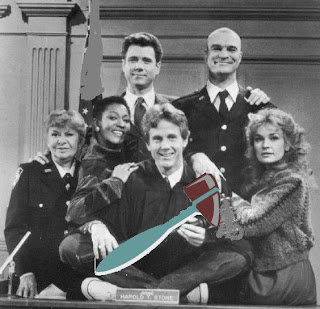
But, hey, I’ve got a great idea for a new sitcom. We’ll call it Night Clinic. Wacky patient characters with not so urgent medical problems will have us rolling in the corridors as they annoy the tired ER docs with their crazy antics. Harry Anderson can play the head ER doc. Do you think that really tall guy is free? He’d be great as the triage nurse, or maybe the nightime radiology tech…

Turning Lemons into Lemonade

Gynecology can be a bit of a schizophrenic field. I don’t know of any other area of medicine where the desired clinical outcome can be so completely opposite. I’m speaking of course, about pregnancy. We’re either trying to prevent it, or trying to make it happen, not infrequently in the same patient, just at different times in her life.

One upside to this schizophrenic medicine is that if a treatment worsens one of the outcomes, it may then be good for the other. Take, for example, the Cox-2 inhibitors (Vioxx, Celebrex, Bextra).

COX-2 and the Ovary

Cox-2 is shorthand for cyclo-oxygenase 2, an enzyme that catalyzes the production of prostaglandins from their precursor phospholipids. Prostaglandins are produced in cells all over the body, where they do things like cause smooth muscle to contract, or stimulate pain receptors. They are why you may have menstrual cramps, among other things.

Cox-2 in the prostglandin production pathway

But prostaglandins are not just bad guys – they are thought to have an important role in the physiologic process of ovulation. The ovary has it’s own stores of prostaglandin precursors and cox-2. As ovulation time nears, cox-2 activity in the follicle increases, converting the precursors to prostaglandins. The prostaglandins act to break down the follicle wall and contract the smooth muscle cells in the wall of the ovary, leading to extrusion of the egg. Pretty neat, huh?

Just how important is the Cox-2 enzyme to ovulation? Well, let’s just say that knock-out mice lacking the enzyme are completely infertile. I’d call that important, wouldn’t you?

Cox-2 Inhibitors (The Lemon Part)

Now, as I said before, drugs that interfere with Cox-2 are called Co-x 2 inhibitors. You know them as Bextra, Celebrex and the now defunct Vioxx. You may even have taken them for treatment of menstrual cramps. (For which they are an effective treatment.)

But now that you know what Cox-2 does, you won’t be surprised to find out that taking them can interfere with ovulation. (That’s the lemon part.) In fact, the adverse effect on ovulation is strong enough that it is recommended that women avoid using the Cox-2 inhibitors if they are trying to get pregnant.

A Different Angle (The Lemonade Part)

But, let’s think about it another way, as did the authors of a very interesting study published last month in Human Reproduction.

The investigators took women who were just about to ovulate, and randomized them to receive either the emergency contraceptive pill (ECP) or the ECP + a Cox-2 inhibitor. (Remember that the primary mechanism of action of the ECP is to inhibit ovulation.)

As the graph shows, the addition of the cox 2 inhibitor increased the number of cycles where ovulation was inhibited. This effect was strongest the farther away from ovulation the meds were given, so that the larger the follicle,and the closer to ovulation, the lower the odds were that the treatment would prevent the follicle from rupturing. That’s probably because cox-2 activity is kind of like a runaway train – if you get it early, you can put on the brakes, but if you wait too long, well, let’s just say you’d better step out of the way…

Conclusion? Cox-2 inhibitors are a bad thing if you are trying to get pregnant. But if pregnancy is something you’re trying to avoid right now, they may prove to be quite useful medications.

See? Lemonade.

Make your own Lemonade

The key to great lemonade is to dissolve the sugar by making a syrup. Add some fresh mint to your glass for a special taste.

1 cup of sugar
1 cup of water
Juice of 4-6 lemons (about 1cup)

Pour water into a small sauce pan. Add sugar, and heat, stirring frequently, until the sugar is dissolved completely. Cool a bit. Add the juice and the sugar water to a pitcher. Add around 4 cups of cold water, more or less to the desired strength. Refrigerate 30 to 40 minutes.

Serve with ice and sliced lemons. Serves 6.
_______________________________________________________
References: Massai MR et al. Human Reproduction 2006; 22: 434-439. / Sirois J et al. Human Reproduction Update 2004 10(5):373-385. (Photos used with permission from Photostock.com. Pathway used with permission from Wickipedia.