What’s Wrong with These Trees?

While driving to our cottage in the Endless Mountains of Pennsylvania, I noted with some dismay many of these drooping young trees along Route 80 in the Poconos. We’re talking hundreds of trees, not just the few pictured here.

“What could be happening?” I wondered. Some disease? A new blight? Dehydration? Roadside fumes?

I decided they were birches, given the white trunks. So I went to the web, where I read about birch blight, and gypsy moths, and wood rot, but found no real answer to my question.

Then I found the website for the Pa Dept of Conservation and Natural Resouces, and emailed them my question. To my delight, I received the answer within 48 hours:

“I believe what you are seeing are gray birch trees. These are small, white barked birch trees that tend to grow in openings, like along highways. The ice storms of Jan. 2005 caused major damage to these trees. They are short-lived and tend to naturally suffer this type of damage. They reseed readily in openings and the storm damage has no effect on the overall birch population.”

Relieved that our forests were not on the verge of destruction, I went back to the web to read more about the drooping gray birch. There I found this wonderful essay written and read by Robert Finch as part of his NPR series Cape Cod Notebook. Although I encourage you to head on over and listen to this lovely essay in toto, here’s a bit of what Finch tells us:

If there’s a tree version of “white trash,” I suppose it would be the gray birch – tough, stunted, scraggly, generally disparaged, yet fertile and tenacious… After ice storms they’re often the most pitiful-looking trees in the neighborhood. Their thick heads of fine twigs and branchlets catch and hold the flying ice like nets, and bend the narrow trunks over into attitudes of despair.

Perfect description, Isn’t it? “Attitudes of despair.” Here’s more from Finch:

Robert Frost found a more hopeful and sensual image for this in his famous poem, “Birches,” where he describes their bent forms after an ice storm as being “Like girls on hands and knees that throw their hair/Before them over their heads to dry in the sun.”

You can read Frost’s entire poem here. Do read it. Like all of Frost’s poems about nature, it is also about life.

Don’t you just love the internet? You start out searching for tree disease information and end up learning the poetry of Robert Frost.

Category: Considerations

What’s Best? Blueberry Cake w/ Lemon Sauce

What could be better than fresh Vermont blueberries you stopped to pick along the way home from picking your daughter up at camp?

How about getting this wonderful little cookbook (© 1951) from said daughter, who bought it for you at a thrift shop in Brattleboro while on a camp field trip?

Or better yet, how about finding in that cookbook an amazing recipe for blueberry cake with lemon sauce?

But do you know what’s really best of all? I’ll tell you…

Blogging again, that’s what!

Blueberry Cake with Lemon Sauce
This was hands down the lightest, moistest cake I’ve ever made. It may have been the fact that today was incredibly hot yet not very humid. Or that I really did sift the dry ingredients three times. I’ll have to try the recipe again on a cooler day and see if I get the same results. And the lemon sauce – to die for. Let me know if you can think of other uses for this sauce. It is truly special – the combo of lemon and nutmeg really works.

1 1/2 cups fresh blueberries
2 cups flour
2 tsp baking powder
1/4 tsp salt (I used a scant 1/2 tsp kosher salt)
1/2 tsp cinammon (I accidentally left it out, and it was fine)
1/2 cup butter
1 cup sugar
2 eggs, separated
2/3 cup milk
Lemon Sauce (recipe follows)

  1. Wash and drain berries. Dust with 2 tbsp of the flour.
  2. Sift dry ingredients, including remaining flour, 3 times.
  3. Cream butter until light, add sugar gradually, and beat until thick and lemon-colored.
  4. Add well beaten egg yolks. (I didn’t beat first, just added them one at a time.)
  5. Alternately, add milk with dry ingredients, beating well. (I beat just enough to incorporate, being careful not to overbeat.)
  6. Fold in stiffly beaten egg whites.
  7. Fold in blueberries.
  8. Bake in a well-buttered and floured 8×8 inch cake pan about 35 mins in 350 degree oven. (I ended up with too much batter for this pan, that’s how light this cake ended up. I had to cook it a little longer to get the middle set. Next time I will use a slightly larger pan.)
  9. Remove and let stand 5 minutes before removing to wire rack.
  10. Serve hot with lemon sauce.

Lemon Sauce
Cook 1/2 cup sugar and 1 tbsp flour in1 cup boiling water over double boiler for 10 minutes (I ended up putting it directly over heat to thicken it up). Add 1/2 tsp nutmeg, 2 tbsp butter, and the juice and grated rind of 1/2 lemon.

Category: Food

Cell Phones in NYC Public Schools

Those of you not living in NYC may not know, but our mayor recently instituted mandatory random security scanning of middle school and high school students. In addition to confiscating weapons, they are also confiscating cell phones, because cell phones are banned in schools here.

I don’t have a problem at all with random security scanning to keep weapons out of the schools, or with banning the use of cell phones during school hours. But banning the carrying of cell phones is just ridiculous. Every kid in NYC, including mine, carries a cell, which my daughter uses almost exclusively to call me as she wanders the city throughout her day to and from school and to after school activities.

So unless they let her check the phone at the school door the way they do at the courthouse, she’s going to have her cell phone in her backpack or locker. Because there is no way that I am sending her out every day without some way of keeping touch with her. Call me crazy, neurotic or overbearing, but that’s just the way it is. I know kids survived without cell phones in the past, but the past became officially over on 9-11-02.

I wrote to the chancellor’s office opposing the cell phone ban, and here was the reply I received today via email:

Thank you for writing to Chancellor Klein regarding the Department of Education’s policy on cell phones. The Chancellor received your correspondence and he has asked me to follow up with you on this matter. I am responding on the Chancellor’s behalf.

While we sympathize with your concerns, it is the experience of many of our principals and teachers that if phones are allowed into school buildings, they will be used inappropriately….whether it takes the form of talking, e-mailing, messaging, taking photos or playing video games.. cell phones inevitably disrupt the school’s learning environment.

Students use cell phones during the school day in cafeterias, hallways, and even classrooms for reasons other than crucial communications with parents and guardians. Aside from simple disruption, students have used cell phones for far more serious offenses. In the past, for example, students have use cell phones to rally support during fights, to cheat on exams, and to take illicit photos of schoolwork or people.

In addition, students are not the only ones who are complicit: non-essential calls from parents regarding chores or reminders, for instance, are among the leading disruptions caused by cell phones in schools.

All of these situations negatively impact the learning environment and cannot be tolerated, which is why nearly all school leaders in our community agree with our policy banning cell phones from schools.

Parents should remember that they can reach their children when necessary at any time during the school day through the principal’s office or the school’s parent coordinator. We do not pretend this policy substitutes for the convenience offered by cell phones, but it does help ensure a far more stable, serious, and focused atmosphere for learning.

We are sorry for any inconvenience or hardship this policy causes you and your family. Please know that it exists solely for the purpose of maintaining safety and order in the school building. If there is a medical or other compelling reason that you feel requires you or your child to have a cell phone, please speak to the principal about it so that appropriate arrangements can be made.

Thank you again for writing the Chancellor.

When I was in high school. some kids used to pass notes to cheat and stir up trouble, but we didn’t ban the use of paper and pencil in response.

There is a rally at City Hall on May 11 at 4:30 pm for parents and students opposing the ban. Trust me, it will be well attended by parents and students. In the meantime, if my kid gets ger cell taken away during a random security screen, we’ll deal with it.

And I’m curious – for those of you with kids in schools outside of NYC, – what’s your district policy on cell phones?

Category: Considerations

AMA: That American Marketing Association?

I recently posted about a marketing scam called the National Honor Roll, and how my daughter was scammed into giving them her personal information through a school-based “college survey.” I was outraged, my daughter was outraged, and her school was outraged.

Turns out I’ve been scammed by the American Medical Association in pretty much the same way for over 20 years.

Last year, I became aware that Big Pharma tracks every prescription I write. Apparently, marketing companies obtain prescription data (absent patient identifiers) from large drug store chains and insurers. They then sell that information to pharmaceutical companies, who use it to target their marketing and sales force efforts.

What I did not understand until I read this article in the NY Times last week was that this information is fairly useless until it becomes merged with my corresponding personal information collected by the AMA. The AMA keeps something called the Physician Masterfile, a longitudinal tracking database on every doc in the US. You physicians know this – the AMA sends you the update forms and we all diligently fill them out, year after year, and send them in.

I never officially joined the AMA, having become a doc around the same time that it became known that the AMA got rid of the tobacco stocks in their portfolio only after their holdings were exposed by the press. But I have faithfully sent in my updated physician information to the AMA every year, thinking that somehow it was part of something bigger than myself.

And in many cases, it is. That database is used by academics, health departments and others for research, medical licensing and public health activities. And that’s just fine with me. What I object to is the fact that the Physician Masterfile is also licensed for marketing use.

I guess I should have realized it years ago. I must get 20 pieces of junk mail at my office a day, all of it selling me something. How else would all these companies know I existed? Truth be told, the AMA is quite open about the Physician Masterfile and it’s uses on their web site:

For more than half a century, the AMA has made the AMA Physician Masterfile available to the health care community to serve the public good and medical industry. Today, the AMA has contractual arrangements with Database Licensees who specialize in direct mail, marketing services, the management of complex pharmaceutical call reporting systems, data integration services, and other health-related and research activities. These sophisticated organizations offer high tech computer processing and file maintenance, as well as the development of new types of information products and state-of-the-art techniques for direct marketing. Users of the AMA Masterfile include: large pharmaceutical companies, hospitals, medical colleges and universities, medical equipment and supply companies, consultants, market research and investment firms, insurance companies, and commercial organizations.

The NY Times says that the Physician Masterfile nets 40 million dollars annually for the AMA. It is no surprise, then, that the AMA is doing their best to protect its licensing agreements from legislation aimed at restricting Big Phama’s access to presciption information. They’ve created something called the Prescription Data Restriction Program, with which they hope to appease legislators and doctors who are trying to control the flow of personal information. Again, from the AMA website:

The Prescribing Data Restriction Program (PDRP) will take data away from reps and their direct supervisors, but leave it available to the company for marketing, compensation, and research. The rules allow the industry to retain access to prescribing data for most purposes, but they require companies to police their own sales forces. If they succeed, legislators will turn their attention elsewhere, and the industry can hang onto one of its most valuable data sources.

I have my doubts about the PDRP. I don’t trust Big Pharma one bit to police itself or limit the use of the Masterfile information. And I really resent the sale of my personal information by the AMA. The AMA claims that physicians could always opt out of sharing information for marketing by phone, mail or fax. But not to sharing their Masterfile data with Big Pharma.

As of July 1, bowing to pressure from physicians and groups such as the American Academy of Physicians, the AMA will give also me the option to prevent my information from being shared with pharmaceutical reps. But that’s not enough. Because they will still be allowed to share my information with pharmaceutical companies for marketing research and other internal uses. I don’t have an opt out for that. And that’s just not right.

_________________________________________________________

Here’s how to do a limited opt-out of the the AMA Masterfile:

By E-mail
nocontact@ama-assn.org Do Not Release: norelease@ama-assn.org

By Phone
Call (800) 621-8335 Fax* (312) 464-4042

By Mail (requires signature and professional letterhead)
Department of Data Quality and Measurement
American Medical Association
515 N. State St.
Chicago, IL 60610

By Web
No Contact: www.ama-assn.org/go/nocontactform
Do Not Release: www.ama-assn.org/go/noreleaseform

Category: Second Opinions

Would You Give Me Samples?

(From the movie “Rent”. Click on link to view video in Real Player)

Note: This is an old post, lost in the site crash and re-posted today.

We have a new Drug Sample Policy here. It requires drug reps to make appointments rather than walk in unannounced. They must log in their samples. I must adhere to certain guidelines regarding storing, labeling and recording the samples I dispense. Also, we are officially no longer allowed to accept anything, not even pens. And no drug lunches, of course.

I believe this is a good thing.

These are a few things I have noticed since the new regulations (which I helped write) went into effect.

1. There are less samples in the closet. But I seem to have all I need.

2. I think twice. Because it is more work for me, I now think twice before handing medication to a patient who has a good drug plan and can get it at the pharmacy anyway. I still give out samples to those for whom it makes a difference financially.

3. More rep face time. This was unexpected, but really when you think about it, should be no surprise. Before, although reps may have shown up unannounced, I was also really good at avoiding them. Now, they get a fixed slot in my schedule to come to my office and pitch. And I’m not happy about this.

So last week, in a burst of righteousness, I turned down a whole bunch of Imitrex samples from the drug rep who visited. Because the truth is, the only person using the Imitrex samples in my office was me. The reps know I get migraines, and that I can’t accept gifts, so I decided that they must have been using the Imitrex to worm their little way into my heart (and my prescription pad). So I turned their dirty drug samples down.

But now I have a migraine, and no Imitrex, because I didn’t get my act together enough to get my own stash from the pharmacy. I think I’ll head down the hall to my friend the neurologist, who keeps a stash of Imitrex in her exam room closets. At least I won’t have to use the fire escape.

Category: Second Opinions
__________________________________________________________________
COMMENT-AUTHOR:medstudentgod, May 03, 2006
Well done!!! I’m glad to hear that there are offices out there that are taking the drug rep situation under control. Being a student I have seen them weasle their way around the office, act genuinely concerned about MY well being (despite having never met before) and dishing about all their samples to students. All of this is done, no doubt, to decrease student security safeguards when they become actual physicians. Therefore they are more apt to prescribe certain, expensive, new drugs without really knowing why. Thanks for your continuing discussion on this important topic.

COMMENT-AUTHOR:mchebert COMMENT-DATE:May 05, 2006
I am not as concerned about pens and lunches as you are, I guess. Drug reps are not the enemy. They just need to be counterbalanced.

But I have to ask the question, you use the passive voice here, as in “we are officially no longer allowed to accept . . .” Does this mean, TBTAM, that the decision was made by you, or do you work for someone who made the policy?

COMMENT-AUTHOR:TBTAM COMMENT-DATE:May 05, 2006
The new policy was handed down from the powers to be. I was asked to help write our department-specific guidleines following the new policy.

And you are right – they are not the enemy. I get a little carried away sometimes…

Grilled Fish w/ Mango Citrus Sauce

I know, I know. It’s been ages since I posted anything about food.

Finally, here’s a recipe for a delicious dish Mr TBTAM and I made together last night. It was nice to get some quality cooking time together…

Grilled Fish with Mango Citrus Salsa

We got the recipe from a great little site called Mango Recipe Guide. We used Mako Steaks and served it on a bed of rice with a side of brussel sprouts (blanched, cut and sauteed with a little onion, balsamic vinegar and mustard) and a nice Pinot. I don’t know if you can see the fish up there under all that salsa, but trust me it is there. You can use any fish, really. I think it would have been even better with Telapia, my latest favorite fish.

GRILLED FISH & MANGO CITRUS SALSA

For Fish
1 1/2 lbs. fresh fish (tuna, swordfish, mahi mahi)
3 tbsp.fresh squeezed red grapefruit juice
3 tbsp. white wine
2 garlic cloves, minced
1 tsp. cumin
1 tsp. chili powder
1/2 tsp. dried leaf oregano
1/2 tsp. sea salt
1/2 tsp. coarsely ground black pepper
1/3 cup olive oil
2 red grapefruit, sectioned for garnish
2 large mangos, peeled, pitted and sliced in 2 ” wedges

Mango Citrus Salsa
1 red grapefruit, peeled and sectioned
1 large mango, peeled, pitted and cubed
1 jalapeno pepper, seeded and minced
1 1/2 tsp. sugar
1/4 tsp. sea salt
1 cup diced green, red and yellow pepper
1 large orange, peeled and sectioned
1 medium tomato, diced
3 tbsp. chopped red onion
1 tbsp. chopped fresh cilantro

Place fish in large, shallow dish. Combine in small bowl, juice, wine, garlic, seasonings and olive oil. Blend well. Reserve 2 – 3 tbsp. for basting and pour remainder of marinade over fish. Chill for several hours, turning occasionally. Prepare salsa by combining all salsa ingredients in medium bowl. Grill fish about 6 inches from heat, basting with reserved marinade. Cook until fish flakes with a fork, allowing 10 minutes per inch of thickness, and turning once. Transfer to serving platter. Drain extra juice from salsa and spoon 1/2 cup salsa over each serving of fish. Garnish with grapefruit and mango slices.

Category: Food

Snaps to Brown University

I got a call from the on-campus Pharmacy at Brown University today, requesting refills on my patient’s birth control pills. Turns out Brown University is one of only 2 campuses in their state who have an on-campus pharmacy, which is affiliated with the campus Health Service. I’m sure that a lot of their business is antibiotics and other medications needed by the students there. But I’ll bet they fill a lot of birth control prescriptions. And I think that’s just great.

Anything we can do that removes a barrier between young people and contraception gets snaps from me. Most college health services require you to leave campus and go to a local pharmacy to fill your presriptions. Here in the big city, that’s not too much of a problem. But put a college in the middle of nowhere, and for students without a car, that’s a significant disadvantage. Some schools get around it by giving out pills for free through subsidy programs, which is even better. But if you can’t do that, an on-campus pharmacy is the next best thing, as far as I’m concerned.

And though I focus on the contraceptive issue (after all, it’s what I do), it’s even more impressive that kids with conditions like asthma and diabetes can get their meds right on campus.

What are snaps? Well, if Legally Blonde 2 was showing at your house two times this weekend (once with your younger daughter and her sleepover friend, and the next day when your older daughter insisted on seeing it before it went back to the video store), you would know…

Acupuncture and Infertility – The Jury is Still Out

Three separate studies on acupuncture in IVF patients were published this month in Fertility and Sterility, the premiere journal for reproductive endocrinologists. (You can’t link to full text without a logon, but abstracts are free.) One of the studies suggested that acupuncture improved IVF outcome, the other suggested that one, but not two, treatments was effective (that result made no sense to me), and the third study showed no difference. There were design flaws and issues with data interpretation that make all the results questionable.

Still, it’s good to see research on acupuncture. Hopefully, the design issues can be straightened out so that we get reliable data one way or the other.

Category: Second Opinions

Let’s End the Stigma of Herpes

“Jane, you have a herpes infection.” I say the words calmly, almost casually, but not lightly. Because I know what is coming next. The eyes that fill with tears. The sheer devastation as her world crashes down around her…

Why do we let this virus do this to us?

Herpes is a virus, just like influenza and chicken pox. It doesn’t discriminate. It looks for a mucus membrane to infect, and could care less whose mucus membrane it is.

Did you know that the genital herpes virus is the very same virus that causes fever blisters? (There are two tyes of Herpes, Type I and Type II. Type I has historicaly been associated with oral herpes, and Type II with genital infections, but they can each be found in one another’s territory.)

When I tell someone they have a fever blister, they barely flinch. So why is it when I tell them they have the very same infection in the genital area, they cry?

Maybe it all goes back to the shame we feel about our genitalia. Bardiac tells us that the origin of the word “Pudenda” (Old English for female genitalia, and the name of the nerve that supplies that area) is Latin for “Shame”.

Infection of the oral mucosa. Annoyance. Same lesion, same virus, on the genital mucosa. Shame.

And blame.

When you get a cold, do you pass judgement on the person who gave it to you? Wonder what kind of friends they have or what sort of other women they have dated? Even worse, break up with them?

And yet, I’ve seen it more than once or twice – I tell the woman she has herpes, and the guy, who probably was the one who gave it to her, breaks up with her. Well, good riddance, I say. He failed the herpes test, a true measure of a relationship.

It’s starting to be more and more ridiculous, this stigma around this virus. Do you know that most newly diagnosed cases of genital herpes these days come from transmission of Type I herpes to the genital area (because no one cares about fever blisters, remember)? So now, we are now feeling shame from getting a virus we got because we didn’t care about it in the first place…

If it’s the infection itself that upsets you, let me tell you that there are great drugs that can control the genital (and oral) outbreaks, so that the infection, frankly, is little more than an occasional minor nuisance to almost everyone of my patients who has it. And please be careful about letting Big Pharma tap into your shame to sell you daily medication. Use episodic treatment, along with a little sexual prudence, and you’ll do just fine.

Just in case you think I don’t know what you herpes sufferers go through, let me tell you that I’ve had fever blisters my whole life, along with most of my brothers and sisters. We probably all got it from my mom. I feel no more ashamed of myself for having fever blisters than you should for having genital herpes. Not to mention you have an advantage in that you don’t have to worry about herpes ruining your wedding photos.

Sure, I have to be careful not to kiss my kids or have sex with my husband when I think I am getting an outbreak. And I know that, despite all my care, they may get the virus from me anyway. But that’s life (and love).

Of course, take love out of the picture, and the whole thing changes. Which is why herpes is, as I said before, a good test of a relationship. And if it causes you to only have sex with someone you really care about, and who really cares about you, well, is that such a bad thing?

So stop feeling ashamed of yourself, and get out there and find someone to love. And remember, it’s just a fever blister in a different place. Nothing more, nothing less.

Category: Second Opinions

The Hot Dog Mensch

This is second in a series called I Get It On the Streets. Click on the link at the end for the next post in the series.

Like the Handbag Guy, the Hot Dog Man has been on the hospital corner ever since I started working here, and I suspect, for a few years before. Great dogs and sausages, and unlike the push cart vendors in Central Park who are milking the poor tourists, this guy’s got great prices.

During my first year here, when I was commuting from Philadelphia 3 days a week and totally stressed, I lost my laptop computer. About a week into the loss, I stopped for a hot dog on my way to the train. And there, sitting on the wheel hub chained to the Hot Dog Man’s cart, was my laptop case. Turns out I had set it down there while paying for a soda the previous week.

“I didn’t know whose it was,” the Hot Dog Man told me, “but I figured they would probably pass by or stop again and see that they had left it.” So he schlepped that laptop back and forth with his cart to Queens every night, got a chain to lock it down to the cart so he wouldn’t have to worry about it getting stolen, and waited for its rightful owner (me) to claim it.

I love this guy (and this city).

Next Up: Coffee Guy.

Category: Considerations

The Handbag Guy

This is the first in a special TBTAM Post Series. A link to the next post is at the end of each post.

If you are a city dweller like me, you probably have a cadre of vendors whom you frequent regularly, whether it be for coffee, lunch, fruit or the occasional umbrella or scarf on an inclement day. Here in New York, my vendors are as much a part of my daily life as the corner grocer is to the residents of any small town. Allow me to introduce you one of my favorites –

The Handbag Guy

No Saks 5th avenue or Bloomies for me – I get my bags from this guy. He requested that I not take his photo or tell you his name, but did let me snap a shot of his perch across the street from the hospital. Great selection, nothing too fancy, and most importantly, lots of bags actually big enough to hold all my stuff.

My Handbag Guy and I actually started working this territory at the same time – me in the GYN clinic, him across the street, in 1993. That’s right, he’s been at this corner, and no where else, for 13 years.

Handbag Guy is from Senegal. He came to the US in 1981, served in the Army for a few years, then opened a business up on 125th Street, selling bags and sundries. He did pretty well for a few years, until the neighborhood began to gentrify, and the big chain stores moved in. When his landlord raised the rent to $10K a month, Handbag Guy took his wares to the street and has never looked back. He works alone, and buys his goods from wholesalers, mostly in New Jersey.

Like my bag? I got it from the Handbag Guy last fall. I’ve lost count of the number of complements I’ve gotten on it, and how many women think it’s a designer bag that I spent hundreds on. Nah, it was just $35.

It turns out this is not the first orange bag I got from Handbag Guy. I bought another one exactly like it a week before I bought this one. But the strap broke about 3 days later, probably because I had crammed it so full.

“No problem”, said Handbag guy, when I showed the broken strap to him the next day on my way to the office. “Give me a few days. I’m expecting another shipment, and I’ll replace it for you.”

I gave him my business card, and sure enough, he called me at the office a few days later to report that he had my replacement bag. I sent my daughters over with my old bag, and he made the switch, no questions asked. And since then, whenever I pass and say hi, he asks me how my daughters are doing. I don’t think you can get more personalized service at the finest department stores.

Handbag guy is a licensed vendor, having secured a merchandising vendor license that is all but impossible for anyone but military veterans to obtain. (As opposed to food vendor permits, which are easier to get.) According to The Street Vendor Project Website, the New York City Council passed an ordinance in the 70’s restricting the number of vendor licenses to 853. Since then, the wait list for a vendor licence is so long that they stopped adding names to it in 1992. But there is an exception for vets who can prove an honorable discharge. So when you buy anything other than food from a vendor, if he’s not one of the old timers, odds are he’s a vet, and you should probably thank him for more than just giving you a great price.

Well, now that spring is here, it’s time for me to check out Handbag Guy’s selection for the season. Maybe a pink bag this time?

Next Up: The Hot Dog Man

Category: Considerations

Disease Mongering and Medical Education

This week, PLoS Medicine, a Journal of the Public Library of Science, has published a collection of articles on the topic of Disease Mongering. (Thanks to my friend Annette, who sent me the table of contents today via e-mail.)

Disease Mongering, a term coined by the late journalist Lynn Payer, former health editor at the NY Times, refers to the creation or expansion of disease definitions by the pharmaceutical industry in an attempt to create a market to match the drugs that they manufacture.

The topic has been getting a lot of discussion lately, spurred by the recent publication of Ray Moynihan and Alan Cassels’ book Selling Sickness: How the World’s Biggest Pharmaceutical Companies Are Turning Us All Into Patients. (Here’s a Newsweek interview with author Moynihan.)


No one argues that the pharmaceutical industry creates medications that save lives and cure disease. It’s the medicalizing of things like sexual dysfunction and menopause that are the problem. Or the pushing of drugs like Fosamax for low bone mass in patients without risk factors for osteoporosis other than age. (Trust me, the reps are in here once a week pushing that.)

What I find fascinating is that those who are fighting against disease mongering have taken a lesson from the big pharma playbook, and are using Big Pharma’s own marketing tactics against them. They are “creating buzz” with the media campaign around Moynihan’s book, legitimizing their argument further by publishing it in a scientific journal (PLoS), and now, just as the Pfizer did in the 1990’s to create a market for Viagra, they are convening a conference to teach others about the issue. Brilliant!


The Role of the Physician in Disease Mongering

We physicians must become cognizant of the role we play, often unwittingly, in disease mongering. They get us involved by ploying us with medical education, written and delivered by “thought leaders” in the field, who themselves have a research or clinical interest in the topic at hand, and sometimes are paid consultants to the companies whose drugs they discuss. This sort of education need not be drug specific to be effective, so the MD’s feel as if we are not being bought or used, but are participating in legitimate medical education.

What we don’t see is that we are being used. Big Pharma has learned that if they spend their advertising dollars on disease creation and awareness, they sell more drugs. Rather than fighting over their share in a stable market, they simply grow the market. And, if they “partner” together on disease awareness, they all win.

The problem for me as a physician is that it is becoming almost impossible to distinguish between real medical education and industry- sponsored marketing. Especially when there is so much overlap. And there really is overlap. Industry-sponsored medical education has lots of real knowledge within it. If not, we would never had gotten into this situation in the first place, trust me.

So I try. I really try to distinguish when I’m being marketed to and when I’m being taught. Problem is, I sometimes can’t. Because it is getting harder and harder to identify who’s benefitting from the “medical education” I receive.

Prime example – today, I received a “Newsletter” about menopause and hormone replacement. “Okay”, I thought. “Let’s see which HRT manufacturer sponsored this one.” I looked on the back. Noticeably absent were pharmaceutical sponsorships or disclosures from the panel of experts whose photos appeared on the cover of the newsletter. Just a logo for the Foundation for Better Healthcare.

I went to FBHC website, which describes the organization as a non-profit group whose mission is “Moving clinicians from Knowledge to action”. Action – what action? A prescription, perhaps?

The FBHC has patented a tool they call ROEI – Return on Educational Investment. This term usually refers to educational returns. But look at this statement from the group’s mission: The Foundation for Better Health Care consults with organizations interested in supporting medical education and who want to measure return on investment. What kind of return on investment? Well, according to the conflicts information published at various CME’s sponsored by the FBHC, its executive director owns stock in practically every major pharmaceutical company known to man. Is that the kind of return on investment they mean?

The FBHC seems to be a legitimate non-profit group whose goal is to educate my patients and me. They certainly seem to be holding lots of conferences and CME activities, and they are advertising for CME monitors to assure the objectivity of their educational activities. And to be honest, the activities they sponsor seem just fine to me. But each one is industry sponsored, from what I can tell. And when I see that its director is playing big in the Big Pharma stock market, it has to make me question what this organization’s objectives really are. And toss the Newsletter they sent me into the trashcan.

I’m not trying to point fingers at this foundation as the bad guys – I just happened to get their newsletter today, so I’m picking on them. But let’s be honest – my own professional organization uses industry funds for every single meeting, and I can’t recall a medical conference or meeting in recent memory that I have attended that was not in some was sponsored by an “unrestricted grant from Company X.” I myself have beem paid honoraria to present at meetings.

But I think it’s gone too far. I worry that these non-profit educational consortiums are really fronts for industry sponsored education. And if they are not, it doesn’t matter, because I really don’t trust medical education anymore.

Breaking Up Is Gonna’ Be Hard To Do

Iona Heath, a GP in the UK, writes in the PLoS journal that the first step in combating disease mongering has to be a genuine disentanglement of the medical profession from the pharmaceutical industry. And I agree – the time has come to disengage. But I expect it’s not going to be an easy process. Because the ties between us are so deep and so long, and are getting harder and harder to identify.

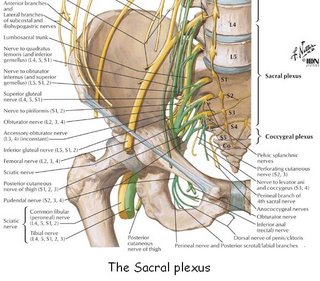
It reminds me of when I was trying to dissect out a nerve from the sacral plexus in anatomy class. I couldn’t do it without bisecting the nerve, and came away both frustrated and as usual, stinking like formaldehyde.

Category: Second Opinions

A Tart Pretty Enough for a Song

This asparagus tart is just so pretty, I don’t know what else to say, except to tell you that it is a combo of several recipes I found, with a dash of champagne vinegar that I thought of all by myself.

I have no idea if it tastes any good, because I am freezing it and reheating it on Sunday for Easter dinner. But you know what? I really don’t care how it tastes, I am so in love with how it looks.(Addendum 4/17/06 – It was delicious. But next time I’ll try freezing it uncooked.)

My daughter thought it was so beautiful that she sang it a song with her guitar. You see, Friday nights are chick-flick night, since Mr. TBTAM has a regular Friday night tennis game, so my daughters and I were watching The Wedding Singer while I was making the tart. We fell in love with the movie even though it is Adam Sandler and corny. After the movie was over, my daughter wanted to learn the chords and words to the song Adam sings to Drew about growing old together. So she went on the web and found them and was teaching herself the song when I called her in to the kitchen to see the tart. When she saw the tart, she decided it was so pretty that we had to sing to it, so she brought her guitar into the kitchen and we all sang the song to the tart. I think it will make it taste even better on Sunday.

Hey, if people can talk to their plants, we can sing to our food, okay?

Colorful Spring Asparagus Tart

Make a Pate Brise pie crust in a tart pan with a removable bottom, and bake it till just set and barely golden. (See instructions for pie crust here.)

Peel and trim 1 lb young asparagus. Further tirm the ends of 16 spears to make 3-4 inch spears for arranging on the top of the pie. Cut the remainder of those spears, and the rest of the asparagus into 1 inch lengths. Cut 15 cherry tomatoes in half and set aside.

Heat 1 tbsp olive oil in a 12 inch saute pan. Slice 1 onion thin and saute over medium low heat till soft, about 7 minutes. Add asparagus and saute for an additional 8-10 minutes, until the asparagus are just tender. Sprinkle with 1 tbsp champagne vinegar about halfway through the saute, and just a dash of salt and pepper. Remove from heat to cool enough to handle.

Mix 3 eggs with 1 cup half and half, 1 tbsp chopped fresh tarragon, 1 tbsp chopped fresh parsely, 1 cup coarsely grated gruyere cheese, and a little salt and pepper.

Remove the 16 longer asparagus spears and set aside. Spread remainder of asparagus and onion mixture into the prepared tart pan. Pour egg mixture over top. Arrange 16 spears on top like spokes on a wheel, pushing them ever so slightly into the egg mixture. Scatter the cherry tomatoes on top. Brush the edges of the crust with an egg wash.

Bake on a cookie sheet at 350 degrees F for 30-35 minutes, until golden and just set. You may want to cover the edges with foil for the last 15 minutes of baking time. Let cool slightly before serving. Can be made ahead and frozen, then reheated before serving.

Sing to Your Tart

If you want to sing to your tart too, here’s the music and words!

Grow Old With You

I wanna make you smile whenever you’re sad
Carry you around when your arthritis is bad
All I wann’a do is grow old with you.

I’ll get your medicine when your tummy aches
Build you a fire if the furnace breaks
Oh it could be so nice, growing old with you

I’ll miss you
I’ll kiss you
Give you my coat when you are cold

I’ll need you
I’ll feed you
Even let ya hold the remote control

(Music solo break)

So let me do the dishes in our kitchen sink
Put you to bed if you’ve had too much to drink
I could be the man who grows old with you
I wanna grow old with you

The Shiksa Does Brisket (and Another Prune Recipe)

When I was in med school, all my Jewish friends thought I was Jewish. It may have been because I was funny and smart-alecky and fresh from 3 years of grad school in New York City. Or because somewhere on my mother’s Irish face I reflect my father’s Czech heritage. Or maybe I subconsciously channel the spirit of my dad’s mother’s grandfather, who, we are told, was Jewish.

All of which may explain why, even though I was raised Catholic, attended Catholic grade school, Catholic high school and yes, a Catholic college, I make a mean brisket. Every year in recent memory I have brought the brisket to my friend Linda and Andy’s seder, and every year it gets rave reviews.

Of course, it may just be simply that I have always used my Jewish mother-in-law’s recipe.

Well, this year, the shiksa is branching out. It’s time to stand on my own two Irish-Czech feet, and stop basking in Irene’s reflected glow. I got a new brisket recipe, which I made and brought to Seder last night. Now my brisket reputation with my friends was made on Irene’s recipe, so I was a little worried about shaking that by doing something different this year. But I came across this recipe at Epicurious, and just had to try it. And guess what? It even has prunes in it.

Well, I am ever-so-pleased to report that the new brisket recipe is a winner. It was absolutely delicious. My husband likes it better than the traditional recipe. My friends went back for seconds and even third helpings. (That’s what was left up there in the photo.) And I survived, reputation intact. (Whew!)

Maybe it’s time to flex my Irish cooking muscles and try corned beef and cabbage…

Brisket with Dried Apricots, Prunes and Aromatic Spices
Note: Quantities shown are total used, but amounts are split for use. Read the recipe carefully. I modified the recipe by dusting the brisket with a litte flour before browning, and increased the fruit slightly. I also added tomato paste to the sauce to make it even richer and fuller flavor. Some of the Epicurious reviewers recommended longer cooking times at a lower temperature of 275 instead of 300 fahrenheit. I didn’t have time for that, but think I’ll try it that way next time to see if it makes the meat even more tender than it already was. Finally, the apricot mixture can burn while you are browning the meat, so be careful.

3/4 cup quartered dried apricots (about 4 ounces)
9 large garlic cloves
31/2 teaspoons ground cumin
1 teaspoon kosher salt
1/4 teaspoon ground cinnamon
1/4 teaspoon ground black pepper
1 4 1/2- to 5-pound flat-cut beef brisket
2-3 tbsp flour mixed with 1-2 tsp kosher salt and 1/2 tsp pepper
3 tablespoons olive oil
4 cups chopped onions
2 medium carrots, coarsely chopped
3 tablespoons tomato paste
1 tablespoon minced peeled fresh ginger
1 teaspoon ground coriander
1/8 teaspoon cayenne pepper
1 cup dry red wine
3 cups homemade beef stock or canned low-salt beef broth
3/4 cup pitted prunes, quartered
Chopped fresh cilantro.

Combine 1/3 cup apricots, 3 garlic cloves, 1 teaspoon cumin, salt, cinnamon, and 1/4 teaspoon pepper in processor. Using on/off turns, chop to coarse puree. Using small sharp knife, make 1/2-inch-deep slits all over brisket. Set aside 1 tablespoon apricot mixture. Press remaining apricot mixture into slits.

Position rack in bottom third of oven and preheat to 300°F. Heat oil in heavy large oven-proof pot over medium-high heat. Gently rub brisket all over with flour mixed with salt and pepper to taste. Add brisket to pot and sauté until brown, about 5 minutes per side. Transfer to plate, fat side up; spread with reserved 1 tablespoon apricot mixture.

Add onions to same pot. Sauté over medium-high heat 5 minutes. Add carrots, tomato paste, ginger, coriander, cayenne pepper, remaining 6 garlic cloves and 2 1/2 teaspoons cumin; sauté 3 minutes. Add wine and boil until reduced almost to glaze, stirring up any browned bits, about 5 minutes. Return brisket to pot. Add stock and bring to simmer. Spoon some of vegetable mixture over brisket.

Cover pot and place in oven. Roast brisket 2 1/2 hours, basting every 30 minutes with pan juices. Add prunes and remaining apricots. Cover; roast until brisket is tender, about 30 minutes longer. Cool brisket uncovered 1 hour. Chill uncovered until cold, then cover and keep chilled overnight.

Spoon off any solid fat from top of gravy; discard fat. Scrape gravy off brisket into pot. Place brisket on work surface. Slice brisket thinly across grain. Bring gravy in pot to boil over medium-high heat. Boil to thicken slightly, if desired. (I found that I didn’t need to thicken the sauce.) Season gravy with salt and pepper (also not necessary.). Arrange sliced brisket in large ovenproof dish. Spoon gravy over. Reheat either on the stovetop or in a 350 degree oven for about 20-30 minutes.

Sprinkle with cilantro and serve.

Iene’s Pot Roased Brisket

Haverchuck has requested that I post Irene’s recipe for comparison, and here it is. You’ll see it’s really not that different from the one I made. I think it’s pretty funny that her first ingredient is pancetta (optional, of course). I use olive oil, but I’ll bet the bacon adds great flavor.

4 oz. pancetta or bacon, cut in half inch cubes or 3 tbsps. olive oil
3 tbsps. Flour, optional
Salt and freshly ground black pepper
3 ½ lbs brisket or boneless beef rump roast, in one piece
2 medium onions, chopped
3 medium carrots, peeled and chopped
1 stalk celery, chopped
4 cloves garlic, peeled and minced
1 cup fruity red wine, like Beaujolais
3 tbsps. Tomato paste
2 tbsps. Fresh thyme leaves
1 bay leaf
2 ½ cups veal or beef stock

1. Preheat oven to 300 degrees
2. Place pancetta or bacon in a 5 or 6 quart oven-proof casserole dish, and saute over medium heat until it is browned. Remove pancetta, leaving fat in pan. Set pancetta aside. If you don’t want to use bacon fat substitute 3 tbsps. of olive oil.
3. Season flour with salt and pepper, dust beef roast with flour and brown it in casserole over medium high heat. Remove it from casserole, and set aside. Drain all but a film of fat from pan. (You can brown the meat without the dusting of flour)
4. Add onion, carrots, celery and garlic, and cook, stirring, over medium heat until they have softened. Add red wine, and cook over medium-high heat for several minutes. Stir in the tomato paste. Return beef to pan, and add thyme, bay leaf and stock. Bring to a simmer, cover and place in oven for 3 hours, or until meat is tender.
5. Remove meat from casserole, cool and wrap in aluminum foil. Refrigerate overnight before slicing. Store gravy separately, overnight also, and remove fat when it solidifies.
6. Slice meat and reheat in gravy.

Category: Food

If There’s a Heaven…

Then this is it (at least for me).

It’s 10:30 am on a weekday, and I’m in my kitchen cooking. The rain has cleared, the sun is streaming in my kitchen window, the ceiling fans are on and blowing warm spring air, I’m listening to Brian Lehrer on WNYC, the kids are downstairs in the courtyard playing, and my babysitter is here.

I’ll blog tomorow about exactly what I’m making. Just wanted to share my joy.

Category: Food