I’ll be Tweeting Grand Rounds on January 3 – Call for Submissions

A New Year calls for a new Grand Rounds.  Let’s see if we can move this blogger-era dinosaur into the new era of social media by integrating it more fully into Twitter.

Submit your post to tbtam@rcn.com by 11:59 pm on Jan 1. Include your twitter @profile name and a shortened url for your post (via bitly.com, tinyurl.com, goo.gl, or whatever url shortener you like).

I’m going to play more of a curating role than previously and will be publishing just 12 submissions – one for each year of this still new-feeling century. I’ll post them here, then tweet the lot as a whole and each one individually. I’ll encourage all of those whose submissions are accepted and those reading to retweet the lot and individual posts as well.

Let’s make a whole lotta’ New Year’s noise in the Tweetspace and see if we can crank up the social media volume on Grand Rounds! (You can start now by tweeting this post – just click on the twitter link down there on the left.)

Teen Mom Kailyn Gets Mirena – Contraceptive Choice or Product Placement?

In this week’s episode of Teen Mom 2, Kailyn heads to her gynecologist for birth control and leaves with a Mirena IUD in her uterus.

The entire encounter, obviously edited, ran more like a commercial for Mirena than a contraceptive counseling session. Other contraceptives were mentioned generically only  -“a patch”, “a ring”, “the pill” – but when it came to the IUD, all we hear is the word Mirena – six times, to be exact, during the entire 2 and a half minute encounter with the doc.

DOC: If you don’t like the birth control pill, you do have other options. You know that there’s a birth control patch.
KAILYN: (suspiciously) Yeah
DOC: There’s a once a month vaginal ring. The ring itself is not uncomfortable. (Hands her the ring) They’re one size fits all – Right Isaac? (Baby plays with Nuvaring) They’re cool, right?
KAILYN: I just feel like me putting something in myself is all that much more room for error.
DOC: There’s also the Mirena.
KAILYN: Whaaaat is Mirena?
DOC: The Mirena goes right inside your uterus. They’re THE most effective method of birth control available because it really doesn’t rely on you to do anything or remember to do anything. (Part of a pamphlet shot) That’s what it looks like. It lasts for 5 years. If before 5 years you decide you want to have another child, it’s very easy to remove a Mirena right in the office.
KAILYN: I think I want Mirena.
DOC: If you want to, we can put it in today – and it only takes about a minute to put it in.
KAILYN: Does it hurt?
DOC: It’ll hurt a little tiny bit for a few seconds when it goes in
KAILYN: OK.All right – let’s do it.
DOC: You’re sure?
KAILYN: I’m sure
DOC: I’ll get you set up for it then.
(Staff member, who appears to have been waiting outside the door on cue walks in and offers to take the baby. Kailyn next gets onto table and we cut to Doc doing insertion.)
DOC: All right, if at any point it’s too much, we’ll stop…All right, this is the part that causes the little cramp (Kailyn winces slightly) You’re Mirena is in! You have birth control for FIVE YEARS. You can push yourself up off the edge.
KAILYN: So I’m being protected right now?
DOC: Immediately
KAILYN: I feel better already
DOC: (Smiles) Good. And I will recheck it for you in 6 weeks. Call me in the meantime if you need something before then.
KAILYN: All right, thank you.
(“Protected” stamped across screen. Fade out)

What Kailyn (and MTV’s millions of teen viewers) didn’t hear about Mirena

No one appears to have told Kailyn about anything other than Mirena’s convenience and efficacy and that it pinched a bit going in.

There is no mention that if Kailyn chooses Mirena, she should be prepared for changes in her menstrual cycle, most likely irregular spotting and over time, absence of menses.

Or that Mirena may worsen what appears to be her already pretty bad case of acne, so let’s have a plan for handling that up front.  (Or maybe reconsider Nuvaring – it’s actually pretty darned easy to use and could actually help her skin.)

No one mentioned  that there is another IUD called Paragard that acts a little differently. Or that IUD’s in general carry a small risk of pelvic infection at the time of insertion, should not be used by women who have already had PID, and don’t protect against STD’s, so is her boyfriend still going to use a condom?

All MTV viewers saw was a young woman dismissing every other form of birth control and happily leaving her doctor’s office with Mirena. Best 180 seconds of product marketing Bayer ever got.

Kailyn chose Mirena, but will she continue it?

If Kailyn’s counseling session really went down the way it was edited, I’d have concerns that she was not adequately prepared for the actual experience of having a Mirena, and might end up discontinuing her IUD much sooner than either she or her doctor expect.  She wouldn’t be alone in that regard – Early data suggest that close to 50% of teens will discontinue their IUD in the first 1-2 years of use.

Let’s not set teens up for failure by hyping Mirena on reality TV. Tell them what they need to know in order to make responsible, informed decisions.

It’s called contraceptive choice. Not Contraceptive marketing.

Coffee-Marinated Braised Short Ribs for Christmas Eve

The wonderful thing about braised meat is that it literally cooks itself. The not-so-wonderful thing is that you need to plan ahead for the pr0longed cook time, especially if there is also a pre-braising marinade.

Which means that if you decide at 10 am to make marinated braised short ribs for dinner, then spend the entire marinade time doing last minute Christmas shopping with the kids, you won’t be eating Christmas Eve Dinner till after 10.

Which was fine since we weren’t entertaining anyone but our ourselves.  We had plenty of relaxed family time decorating the tree, wrapping presents, enjoying mulled wine and watching It’s a Wonderful Life on TV before sitting down to what was a delicious and very special meal. So special we may just do it again next year!

COFFEE-BRAISED SHORT RIBS

This recipe is modified from a bison-rib recipe on Epicurious.  I’ve since found another coffee braise that does not call for marinade, and will try that one next time. Serves 4-6.

Marinade
4 cups water
3 cups strong brewed coffee
1/2 cup coarse kosher salt
3 tbsp + 2 tsp packed  brown sugar
1/4 cup pure maple syrup
2 tablespoons chopped fresh rosemary
2 tablespoons + 1 tsp Worcestershire sauce
2 cups ice cubes
4 lbs short ribs

Short Ribs:
1 cup boiling water
1 tbsp instant espresso
4 strips bacon, chopped
2 cups chopped onions
6 garlic cloves, chopped
1/2 tsp red pepper flakes
1 cup low salt chicken broth
1/4 cup Mr TBTAM’s barbecue sauce (you can use tomato paste or chili sauce)
1/4 cup brown sugar
2 tablespoons Dijon mustard
2 tablespoons apple cider vinegar
1 tablespoon soy sauce

Marinade
Stir  water, coffee,  salt and sugar in large bowl until salt and sugar dissolve. Add syrup and remaining marinade ingredients. Stir until ice melts. Add ribs. Place plate atop ribs to keep submerged. Cover and chill 4 to 6 hours. Drain ribs; discard marinade.

Short ribs
Preheat oven to 325°F. In a pyrex measuring cup, stir instant espresso into boiling water and set aside to cool.(Alternatively, use another cup of strong brewed coffee.)

Sauté bacon in heavy heavy ovenproof pot over medium heat until fat starts to render and it begins to brown (be careful – don’t burn it!) Remove  bacon to a plate. Increase heat to medium-high. Sprinkle ribs with salt and pepper.

Working in batches, cook ribs until browned on all sides and transfer to a plate. Add onions, garlic, carrots and red pepper flakes to the pot and cook over medium heat till veggies are soft, about 10 minutes. Add coffee and broth; stir, scraping up browned bits. Add remaining ingredients; bring to boil. Add bacon and ribs, cover, and transfer to oven. Braise until meat is tender, about 2 hours.

Transfer ribs to plate; tent with foil to keep warm. Spoon fat from surface of sauce. Boil sauce until thickened and reduced to your satisfaction (about 2 cups). Pour sauce over ribs.

Serve over homemade mashed potatoes.

The Latke Master’s Latkes

This latke recipe was good enough in 2007  to garner my blog a mention in the New York Times.

Secrets of the latke masters. Happy Hannukah. [The Blog That Ate Manhattan]

I figure that makes it good enough to re-post today.  Happy Hanukkah!

Potato Latkes

3 pounds yukon Gold potatoes
2 eggs, lightly beaten
1 1/2 large onions
A little less than 1/4 cup Motzah Meal
Salt
Pepper
Canola oil for frying

Peel potatoes. Shred using the food processor and remove to a large bowl. Shred the onion the same way and add to the bowl. Open out a large clean dishtowel onto the counter and dump the potato onion mixture on it. Top with a second clean towel and lightly roll to mop up the excess liquid (Don’t overdo it, you need a little of the potato starch and liquid for things to stick together.If you use Russet potatoes, don;t drain them at all, as they have very little water content) Dump back into the bowl and add the eggs and the motzah meal. Season with salt and pepper.

Heat about a 1/2 inch of canola oil in electric frying pan at highest heat (mine goes to 400 degrees Fahrenheit). Scoop some of potato mixture into a large spoon, then put into the oil, flattening with the back of the spoon. Cook until the edges start to crisp and the underside is light brown, then gently flip and cook the other side.

Remove from pan to a cookie sheet lined with paper towels or newspaper. Keep warm in a low oven while cooking the rest of the potato pancakes.

Serve with sour cream and warm homemade applesauce.

BTW,  if you noticed there are two different spellings of Chanukkah on this post, well, that’s just the way it is.

Pharmacies Commonly Deny Older Teens Access to Emergency Contraception

It’s bad enough that the federal government is preventing younger teens from getting easier access to the morning after pill.

Now we find out that older teens, who by current law should be able to buy ECP’s without a prescription, are being told by pharmacies that they can’t. 

In a phone survey conducted by researchers in five cities nationwide, pharmacies gave a disturbingly high rate of incorrect information out to callers posing as 17 year olds seeking access to the morning after pill, telling them that they could not obtain it based on their age.

The availability of emergency contraception did not differ based on neighborhood income… However, in 19% (n = 138) of calls, the adolescent was told she could not obtain emergency contraception under any circumstance. This misinformation occurred more often (23.7% vs 14.6%) among pharmacies in low-income neighborhoods (adjusted odds ratio [AOR], 1.93; 95% CI, 1.53-2.43). When callers queried the age threshold for over-the-counter access, they were given the correct age less often by pharmacies in low-income neighborhoods (50.0% vs 62.8%; AOR, 0.59 [95% CI, 0.45-0.79]). In all but 11 calls, the incorrect age was stated as erroneously too high, potentially restricting access. Adjusting analyses for pharmacy chain as a fixed effect yielded virtually identical results.

The back and forth on teen access to ECP has been confusing, to say the least.  But since 2009, teens age 17 and older have had over the counter access to Plan B.

Pharmacists need to get the rules straight.


Chicken Marbella – A Truly Sweet Repast

New York has been my home now for 18 years, but it feels even more like home now that my old buds from Philly have moved here too. Add in a sister and her daughter visiting for the weekend and dinner becomes a truly sweet repast. Make it it all the more sweet by serving chicken that’s been cooked with brown sugar and white wine after being marinated for hours in vinegar and oil with bay leaves, capers, prunes and green olives. Serve with plain orzo and sides of roasted carrots (recipe coming tomorrow) and Mr TBTAM’s amazing sauteed kale with garlic (I’m gonna’ get him to do a video lesson on this next time he makes it).

Chicken Marbella

This is a modern American classic from the original Silver Palate Cookbook, modified for a crowd and published at Epicurious, made made with legs and thighs instead of cut up whole chicken. This recipe serves up to 12, which was way too much for our small group, but we wanted lots of leftovers for the upcoming pre-holiday week. 

Don’t let the overnight marinade dissuade you from making this marvelous dish. Ours marinated for 6 hours and it tasted great. Other have said 2-3 hours is even enough.  

I’d like to try this again using fresh oregano instead of dried (I have a large pot of it on the terrace). Just have to figure out the quantities to use. The chicken did not get as brown as I’d like (though no one cared but me), not sure why. Thinking about browning it next time before baking. Anyone with tips on this let me know. 

10 lbs chicken legs and thighs
1 head of garlic, peeled and finely pureed
1/4 cup dried oregano
Coarse salt and freshly ground black pepper to taste
1/2 cup red wine vinegar
1/2 cup olive oil
1 cup pitted prunes
1/2 cup pitted Spanish green olives
1/2 cup capers with a bit of juice
6 bay leaves
1 cup brown sugar
1 cup white wine
1/4 cup Italian parsley or fresh coriander (cilantro), finely chopped (we forgot to add it!)

In a large bowl, combine the chicken pieces, garlic, oregano, salt, olive oil, vinegar, prunes, olives, capers and juice, and bay leaves. Season with salt and pepper. Cover and let marinate, refrigerated, overnight.

Preheat the oven to 350°F. Arrange the chicken in a single layer in one or two large, shallow baking pans and spoon the marinade over it evenly. Sprinkle the chicken pieces with brown sugar and pour white wine around them.

Bake for 50 minutes to 1 hour, basting frequently with pan juices. Chicken is done when thigh pieces, pricked with a fork at their thickest, yield clear yellow (rather than pink) juice. With a slotted spoon, transfer the chicken, prunes, olives, and capers to a serving platter. Moisten with a few spoonfuls of pan juices and sprinkle generously with parsley. Serve with the remaining juices.

_______________________________

More on Chicken Marbella

TBTAM’s NYC Restaurant Recommendations

Home cooking is what I do best. And yet, the most frequent e-mail request I get from readers, friends and family is – “Where should we eat when we come to New York?” Finally, after years of repeatedly wracking my brain for recommendations, I decided to create a restaurant recommendations page here on the blog. (You can access it as a drop down on the NYC Tab above)

The list is nowhere near complete, but it’s what I can up with off the top of my head this week, and I plan to update it over time. Restaurants are sorted by neighborhood, and I came up with my own little key up there so folks can get a sense of what kind of place I’m recommending.

Some restaurants I’ve reviewed here on the blog; most I have not (even though I have dozens of pics  and the best of intentions). But let me be clear – I am not a restaurant connoisseur. I’m just an ordinary New Yorker who knows what she likes. Your tastes could differ, so you might seek better advice from one of the sources in the sidebar. If you have a fave you’d like to recommend, tell us in the comments.

Should You Start Residency Eight Months Pregnant?

That’s the question being posed over at Mothers In Medicine, a wonderful group blog the tackles the tough issues faced by working mommy docs.  This time, it’s a 27 year old, fourth year medical student asking if she should apply to joint Family Practice-Ob residency, knowing that she will give birth one month into her internship year, or take a year off instead. (She got pregnant by surprise after failed infertility treatments. Aah, nature …)

Here’s the advice I gave her. Feel free to head on over and give yours.  It will be interesting to see what she does.

Congratulations! It’s always so interesting when our high-tech interventions fail and nature takes over.

Forget that this is residency – It’s a new job.  I don’t think anyone would consider starting a new job in their 36th week of pregnancy, especially one with such huge responsibility towards others, both those in your care and those who work alongside you in your program. It just doesn’t make sense for you, your employer or your fellow residents. (I like to think of myself as a feminist, but I’m also a realist.)

I wouldn’t take they year entirely off, however. Find a research mentor in ob-gyn at your home institution, and get started right now working on a research project in the field you love. Use your energy towards that instead of applications and interviews. If you start it now, you can take time off in the summer for maternity leave and get right back in after that.

You’re going to be a working mom forever, so I say get used to it before residency slams you. Taking a year entirely off is going to make it that much harder to make the transition to residency. You’ll have the upcoming year to work out child care and settle into your new role as a working mom. Trust me, you don’t want to be struggling to find the right babysitter or daycare during your first few months of internship. You need to be able to go to work and forget about home, knowing it’s all taken care of by someone you know well and trust implicitly to take care of your child.

Good luck and let us know how it all worked out!

Peggy

Unwanted Pregnancies, Not Abortion, Linked to Mental Health Issues in Women

I don’t know how many more studies need to be done to prove once and for all what those of us providing reproductive care to women have always known – that abortion does not cause mental illness.  But just in case, here’s yet another one, this time  “the most comprehensive and detailed review of the mental health outcomes of abortion to date worldwide” conducted by the UK National Collaborating Centre for Mental Health.

Data from 44 studies showed women with an unwanted pregnancy have a higher incidence of mental health problems in general. This is not affected by whether or not they have an abortion or give birth…Usually, a woman’s risk of suffering common disorders such as anxiety or depression would be around 11-12%. But the researchers said this rate was around three times higher in women with unwanted pregnancies.

How much better the British Health Services limited budget would have been spent in providing direct reproductive and mental health services to women.

Can we please just stop trying to prove the obvious to those who will never believe the data and spend our energies helping women and their partners prevent unplanned pregnancy?

Birth Control & Blood Clots – Visualizing The Risks

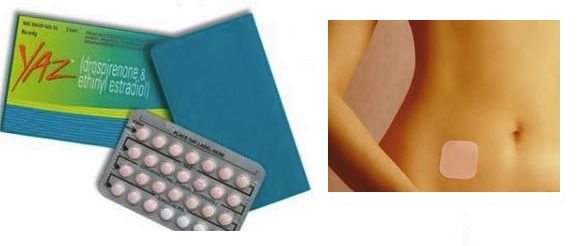
If you’ve been using the Patch, Yaz or Yasmin, you’ve got to be wondering in the wake of this week’s news whether or not you should reconsider your choice of contraceptive. After all, the FDA has pretty much confirmed that these methods have a higher risk of blood clots than older birth control pills. By now, your mom has probably called you and told you to get off that nasty pill, your roommate may already have hidden next week’s patch from you, and you’re holding your breath waiting for a call back from your doctor, who’s probably fielding about a hundred calls today alone from worried pill and patch users

All you really want to know, though, is this –

What’s My Risk? 

It’s an important question that deserves an answer and a conversation with  your doctor. Let’s see if I can help inform that discussion. But first, you need to know a a bit about the subject at hand – blood clots.

What are Blood Clots?

Blood clots are blockages in the vein or artery that occurs when the blood coagulates in the blood vessels.

  • A DVT (deep veinous thrombosis) occurs when blood coagulates in the veins of the leg or arm, where it causes pain, swelling and inflammation.
  • A PE (pulmonary embolus) occurs when a clot forms in the lungs or breaks off from a DVT in the leg and gets lodged in the lung. PE’s causes shortness of breath and chest pain, and if large enough, lack of oxygen and even death.

DVTs and PEs are treated with blood thinners, which almost always work to dissolve the clot, although long term sequelae of the clot can occur.

  • Clots to the heart and brain are exceedingly rare in young women. In birth control pill users, that risk is confined to women over 35 who smoke (and should not use estrogen containing hormonal birth control) and women who suffer from ischemic migraine with aura or underlying medical problems such as heart arrythmias that predispose them to stoke. (Women over 35 with regular migraine may also be at increased risk).

For the otherwise normal, healthy young woman on pills or the Patch, the risk for heart attack and stroke is just too rare to even begin to compare between users and non-users of these methods. And in fact, these risks have not been reliably shown to differ between currently marketed methods. So in this discussion we’re going to confine ourselves to talking about the risk from DVT, where the data appear to be a bit clearer.

How does Birth Control cause blood clots?  

Birth control methods that contain estrogen increase the risks of blood clots by altering the delicate balance of clotting factors produced in the liver. In spite of this, however, most women taking estrogen don’t get clots. So, other factors must also be at play for a clot to form.  Here are those other factors that we know and understand –

  • Long plane flights and car rides. Prolonged immobilization can cause the blood to pool in the legs and clot. In my two decades of practice, almost every clot I’ve seen in my patients using estrogen containing birth control occurred after a long plane flight or car ride. That’s why it’s so important to get out of your seat and walk around on a long plane flight and make frequent stops on long car rides.  And, unless they’re rising in business or first class with a seat that allows them to elevate their legs, I also advise all my patients taking estrogen to wear knee high travel compression socks, since studies have shown that these can lower clot risks due to plane travel.
  • Genetic mutations / Family History. Some people are predisposed to clotting because they carry a mutation in their clotting factors, the most common of which is Factor V Leyden mutation, found in about 5% of the population. Women with such mutations should avoid estrogen. Some day we’ll have an inexpensive blood test to identify these women, but right now the best clue to a genetic mutation is a family history of blood clots. In families with such histories, genetic screening can be done in the affected individuals to identify the mutation and then screening of other family members to find out who is at risk.
  • Obesity and smoking also increase the risks of clotting, in the arteries as well as the veins. Women over 35 who smoke should not use estrogen containing birth control.
  • Surgery and hospitalization. Prolonged immobilization is the reason. Hospitals use compression stocking, pneumatic air pumping leg wraps and even low doses of blood thinners to prevent clots due to hospitalization. (God forbid they get the patients up and walking, but that takes nursing staff, and we’d rather spend the dollars on devices and drugs, don’t get me started…)
  • Varicose veins. Birth control pills don’t cause varicose veins, but women who have varicosities (not superficial tiny spider veins, but large deep veins in the leg) have a higher risk of clotting due to pooling of the blood in the veins of the extremities.
  • Advancing Age. The biggest factor associated with blood clot risks is age, with the elderly being at particularly high risk compared to younger individuals. However, pills are generally still safe to use in healthy women up to the age of menopause.
  • Pregnancy. Perhaps the highest risk women take for blood clots is during pregnany, a time when your risk for clotting increases up to 5 times the rate in non-pregnant women.  Here, the hormone of pregnancy, fluid shifts and edema in the legs are culprits. Researchers often compare the risks of hormonal birth control to the risk of pregnancy, although a better comparison is to compare it to the risk from using another method, combined with the risk of getting pregnant from that method if it is less effective.

The progestin component of pills

Scientists believe one of the factors affecting clot risk in one method vs another may be the progestin component.

  • Northindrone (1st generation progestin)
  • Levonogestrel (2nd generation progestin)
  • Norgestimate, desogestrel, gestodene (3rd generation progestins)
  • Dropeserinone (the progestin in Yaz)

Why? It’s not so clear, and some experts maintain that it makes no biologic sense that, estrogen dose being equal, progestins should impact clot risk at all. Despite this, research is mounting that lower clot risks seem to exist for first and second generation pills. Norgestimate pills may have a similarly low risk, perhaps because they are metabolized in the body to levonorgestrel. The progestin in the Patch is metabolized to norgestimate, but the higher estrgoen dose in the patch probably contributes to that method’s higher clot risk compared to norgestimate pills.

Now that you’re an expert on blood clots, let’s visualize the risks of your birth control

Because the risk of PE is so low, most studies either combined DVT and PE risk, or report on DVT risks alone, which is what I’m going to do.  In general using the patch or  yaz will increase your odds of a DVT by about 50% – that’s called relative risk of 1.5. Translating that to absolute risks is difficult, because the actual numbers of clots occurring in a given study depends on so many things, not the least of which is how they define that a clot has occurred. Each study the FDA examined used a slightly different methodology – some used pharmacy database prescriptions for blood thinners, some used claims-based diagnoses and others added confirmatory chart reviews. Each method has it’s biases, and none is perfect.

Absoute Risk DVT- Background

The background rate of clots among healthy women of reproductive age that I have seen most often quoted in the literature is about 4 per 10,000.  This is your risk if you do not take hormonal birth control.The dots represent 10,000 women over a year’s time, with brown dots unaffected women and red dots those who have a DVT.

DVT Risk – Levonorgestrel and norgestimate pills

The risk in users of second generation pills containing levonorgestrel, or 3rd generation norgestimate pills is about 6 per 10,000. This is the risk that Ortho Evra and Yaz were compared to by the FDA. Here’s what that looks like –

DVT Risk – Ortho Evra Patch

Use of the patch increases that risk to 9 per 10,000.  Here’s what that looks like –

In case you’re having trouble visualizing it, I’ll put it side-by-side.

So you can see, as reported to the FDA,there is an excess of about 3 cases of clots per 10,000 women using the patch compared with those using an older pill. If you’re on the patch, clot risk does not appear to diminish over time. So your excess risk remains about 3 per 10,000 as long as you use the patch.

DVT Risk – Yaz

The risk from using Yaz and Yasmin comes in pretty close to that of the patch, at around 10 per 10,0000. The risk for clots with Yaz decreases the longer you use it. So if you’ve been on it for over a year with no clot, your risk drops significantly for getting a clot in the future, to about 5 per 10,000.

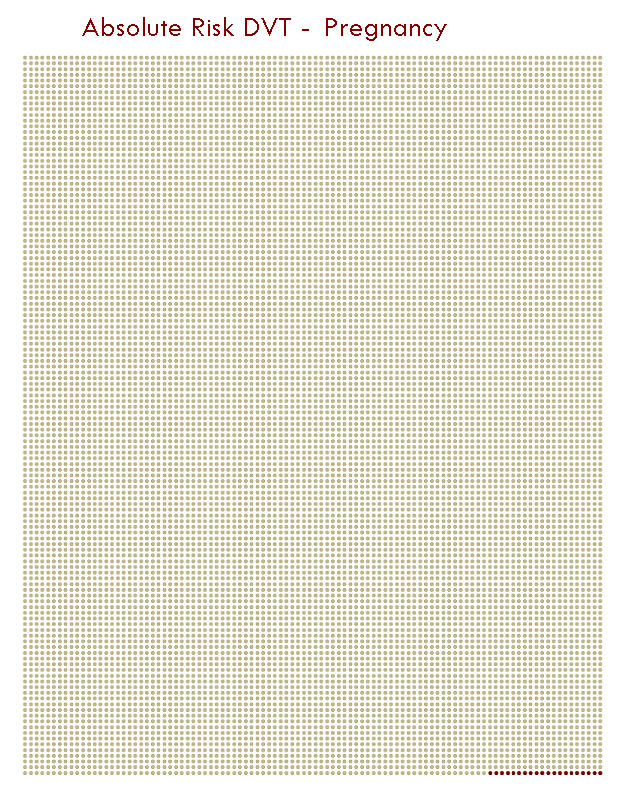
DVT Risk -Pregnancy

Finally, what about the clot risk from pregnancy? Actually, that’s the highest risk of all – about 20 per 10,000 or 2 per 1,000.
What about the Ring? And pills containing desogestrel?

Excellent question. The FDA hasn’t addressed the clot risk with the Ring specifically outside of the FDA approval process. We do know that the ring imparts a significantly lower estrogen exposure than the patch and a 35 ug pill, but it’s unclear if that translates to a lower clot risk. The ring, after all, contains etononorgestrel,  the active metabolite of desogestrel.

Pills containing desogestrel have come in at a risk of about double that of levonorgestrel pills, so I’m going to assume in the absence of data to prove otherwise that the  risk of the ring would be about 8 per 10,000.

Why does it take so long for us to learn about these risks for methods that are already on the market?

Almost all newer contraceptives will have an undefined clot risk, since clinical trials are just too small to detect a statistically significant increase in clots, which as you know now are relatively uncommon events. It’s only when a method makes it out into the general population of millions of women that an increased clot risk becomes evident. (Of course, if the manufacturer does not report all the clots that occur in a trial, that’s a different story, and the subject of recent lawsuits related to Yaz.)

Bottom Line

Your chance of dying from a blood clot related to your contraceptive is about one in a million. The chance you’ll get a blood clot is well below one percent no matter what method of birth control you use.  In that very low risk range, your chance of a blood clot, in order of increasing risk, is –

       Method

Risk per 10,000*

Percent risk*

Non-hormonal. Not pregnant.

4 per 10,000

0.04 %

Levonorgestrel pills Noregstimate pills

6 per 10,000

0.06 %

Desogestrel Pills

8 per 10,000

0.08%

Nuvaring

? 8 per 10,000

0.08%

OrthoEvra Patch

9 per 10,000

0.09 %

Drosperinone pills

10 per 10,000

0.1%

Pregnancy

20 per 10,000

0.2%

* These numbers are estimates based on my best good faith interpretation of the literature and data presented to the FDA on 12/8-9/11. Better numbers may be forthcoming from the FDA or other sources in the future, but for now I need something for my patients and myself to work with. Margaret Polaneczky, MD

Bottom Line

Even if you take the pill or the patch, the odds are overwhelming that you’ll make it through your reproductive years without ever having a blood clot. 

The risk of actually dying from a blood clot due to your hormonal birth control is about one in a million.

If you want to avoid the clot risk associated with estrogen containing contraceptives, you can use something else for birth control. Depo provera, the progestin only pill, Implanon, the IUD and barriers such as condoms and diaphragm are all reasonable choices.Each of these methods come with their own risks and benefit, and none is perfect.

_______________________________________

Additional Reading from TBTAM

FDA Allows the Patch to Stay, But with Better Labeling Supporting an Informed Contraceptive Choice

After cautiously clearing Yaz for continued use yesterday, an FDA Advisory Panel today addressed post-marketing data showing similarly increased blood clot risks among users of the contraceptive patch.  The committee, after having been clearly quite  extensively briefed,  heard testimony from Ortho Evra’s  manufacturer and experts in epidemiology, gynecology and hematology. They also heard moving testimony about  a young woman who died from a massive pulmonary embolism while using the Nuvaring,whose parents argued that not only the Patch, but most of the newer methods carry an increased clot risk that no woman should be allowed to take without being adequately informed.

The committee ruled that despite limitations of the data, the patch most likely carried a 1.5 times relative risk of blood clots compared to 2nd generation levonogestrel pills, but not necessarily higher than that of newer pills containing 3rd and 4th generation progestins and drosperinone.  With a few dissenters, the committee voted to allow the Patch to stay on the market, but asked for new product labeling outlining the increased clot risks.

The Power of a Good Graphic

The Committee seemed to be particularly moved in their deliberations by a visual presentation from  the manufacturer showing that the relative risks of Ortho Evra, while elevated compared to older second generation oral contraceptives, were comparable to that of other newer contraceptives – all of which have remained on the market. A summary slide presented by Anita Nelson, MD, showing absolute risks clustering in a similar range between the patch and other new progestin-containing pills, appeared to be equally compelling in this regard.

In perhaps a reaction to the power of a good graphic, the committee also very astutely recognized that current package labeling is ineffective in conveying comparative risks between methods for both clinicians and their patients, and asked for visual representation of risk in package labeling. They also spent sometime brainstorming how to best communicate risks to patients in general, recognizing that leaving it to the manufacturers may not be the best way to accomplish this important goal.

The Patch – A Unique Method for a Niche Market

The group’s decision on the patch appears to have been impacted in large part by the opinion that the method has a unique place among contraceptive methods due to its transdermal delivery system., even if it is that very system which may be imparting the increased risk.  Although dissenters pointed out that research has not shown the patch to have improved efficacy or compliance over pills,  anecdotal reports from members of the committee and gynecologist Dr Anita Nelson stressed that for some of their patients, the patch was simply the only method they were willing and able to use.  This testimony from practicing physicians appeared to have influenced most of the  panel members, even those who argued initially that the method’s risks did not outweigh the benefit, that there was a niche group of women for women the method might still be appropriate.

As one member of the panel pointed out today, that niche has already been carved by adverse media reporting and the pull back of the manufacturer from DTC advertising and detailing of the method. As a result, the patch was now used by only about 2% of hormonal contraceptive users in 2010. It is this 2% that the Committee appeared to be considering in their decision top allow the patch to remain on the market. It’s a decision with which I have to agree.

Who are the patch users?

They’re sometimes women who have breakthrough bleeding on every pill they try. Women using anti-seizure drugs that cause hormone levels in lower dose pills to drop below the range of efficacy. Women with estrogen withdrawal headaches on pills, who want the efficacy of a hormone but need the steady levels a patch provides (and aren’t willing to use the ring).  And women who have gotten pregnant on pills, don’t want an IUD or Depo, and whose partners won’t wear condoms.

Now the FDA is making sure that they’re woman who’ve been informed that the price they pay for the benefits the patch provides is a slightly higher risk of blood clots. Hopefully, as a result of the FDA Panel’s deliberations today, the Patch’s (and other hormonal contraceptive method) package labeling will evolve from a medical legal document into a tool to truly inform and support an educated contraceptive choice.

__________________________________________________________

More on Today’s Ruling

Politics & The Morning After Pill


Kathleen Sibelius, head of HSS, has overruled the FDA and blocked its recommended approval of the emergency contraceptive Plan B for over the counter access. The move runs counter to Sibelius’  pro-choice record, and to President Obama’s stated commitment to uphold science over politics.

Her argument? She is protecting 11 year old girls, who she states do not have the cognitive maturity to use the medication correctly.

Apparently, though, 11 year olds have the maturity to use Tylenol, a drug that have been shown to cause serious side effects, and even death, if taken at too high a dose.  (Some studies suggest that even taking it at recommended doses for as little as 4 days can cause liver abnormalities.) In fact, if they want to, any 11 year old can purchase up to 100 Tylenol pills for less than a week’s allowance.

The morning after pill, on the other hand, has no serious side effects, even if taken improperly. At a cost of almost $50 for one pill, it is likely never to be purchased by anyone, adult or teen, in a dose large enough to do anything other than what it’s intended to do, which is to prevent an unplanned pregnancy.

This is a travesty.

_____________________________________________________________

More on the Morning after Pill